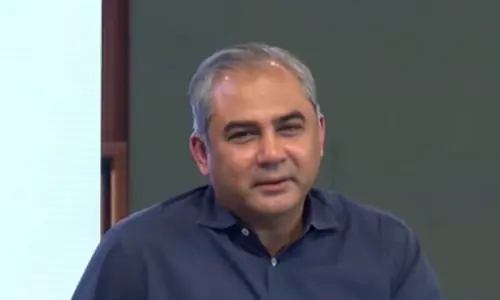
Forty-six-year-old Abbas Mian Nadeem is a legal resident in a small town called Amantea in Italy. Five days ago, he stood outside a private apartment building in the town where 11 migrants were being kept in quarantine, heavily guarded by security forces. The migrants were part of a larger group that had landed by boat along the coast of Calabria.
Till two days earlier there were 24 migrants in this facility, including 13 who had tested positive for the coronavirus. Those who tested positive had been transferred to a military hospital in Rome after locals protested against their stay in their town which was just beginning to open its economy to tourism after a long and painful lockdown. Eleven migrants remained in the facility.
According to a report printed in the Italian newspaper La Repubblica, when Nadeem heard that there were migrants in his hometown, he decided to lend a helping hand and took with him “food, dry clothes and soap”. This was perhaps because a few years ago he had also arrived under similar circumstances, braving the treacherous journey via sea.
By the time Nadeem reached the facility, the remaining migrants were being loaded onto a bus to be transferred out of Amantea, to another quarantine facility over 100km away in Isola Capo Rizzuto.
Despite protests, Nadeem was also put on the bus. Within half an hour of reaching the new facility, a copy of his residence permit had been seen by the authorities. But nothing happened.
Now, five days after the truth is known and the matter has been written about in Italy’s newspapers, and local organisations have stepped in to help him, Nadeem has still not been allowed to go home.
The issue here is not only that a legal resident is being held with migrants without any documentation. The situation is complicated by Nadeem’s health condition. In a video message sent out by him from the quarantine structure, Nadeem says that he is HIV positive, and has Hepatitis B and C with a compromised immunity system. Nadeem fears for his life since he is kept with a group that has been exposed to those who tested positive. If he catches the virus, he says, it may prove fatal. He says he doesn’t have his life-saving drugs with him.
It is still unclear how Nadeem got into this trouble and where the responsibility lies. Earlier reports suggested that this was all a mistake, but follow-up stories quote the authorities as saying that he needs to be quarantined because he came into contact with the group of migrants.
Not everyone agrees with this assessment.
Giulio Vita says, “We refuse this declaration.” He is the president and founder of a local cultural association called La Guarimba and is helping to secure legal representation for Nadeem. He says that migrants were kept in a “militarised zone”, guarded at all times by police and army personnel. It was not possible for Nadeem to have come into contact with them.
Even if he now needs to be quarantined because he has been with these migrants, Vita asks, “Why isn’t he being allowed to isolate at his own residence like any other citizen?”
Vita has been unable to get in touch with him since the last two days. “This lack of communication with a person with a very high health risk is a problem,” he says.
“Now I am being told that he may be in a hospital but I have no confirmation on this because I can’t speak to Abbas,” Vita says.
The Pakistan Embassy in Rome has now taken up this matter and says that they are in contact with local authorities to ascertain the facts of the case and “all due assistance would be extended to the Pakistani national.”
Tensions in town
All this comes at a time of heightened tensions in Amantea concerning the arrival of migrants on the shores of Calabria, a region that has suffered economically during the three-month-long lockdown and has only now started reopening for tourism. Before these migrants (there are conflicting reports over whether they are Pakistani or Bangladeshi) were housed in Amantea, local businessmen protested against the decision to keep them in their town, especially those who had tested positive. They said this would drive away tourists and affect their livelihood.
Calabria Governor Jole Santelli told a television interviewer that she sided with the protesters calling this “not a problem of immigration but of health”. She demanded that the government park a ship out at sea and quarantine all migrants who test positive, away from land.
She said, “For us it is not about wealth, but about avoiding poverty.”
Published in Dawn, July 22nd, 2020