Flour shortage, hoarders and phony crackdowns


 3
3
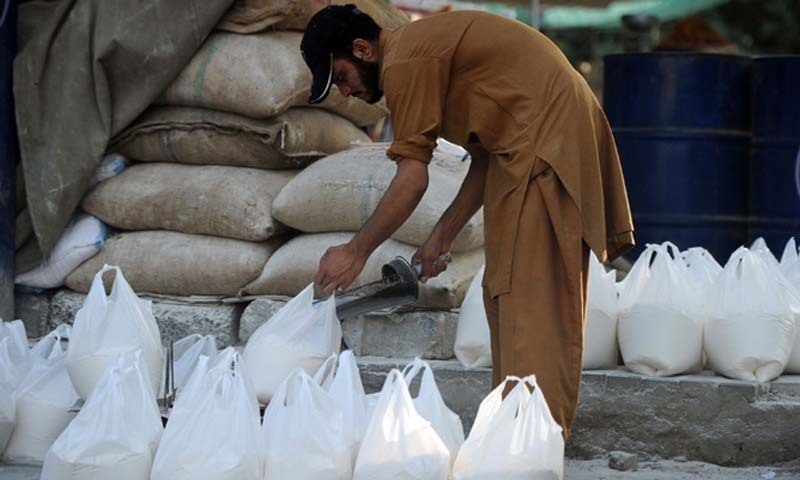

NEWSPAPER headlines on the issue of rising flour prices have changed from dealing with hoarders with an iron fist to the duty-free import of wheat. It raises the question whether the wheat and flour crisis is finally over.
As Prime Minister Imran Khan chaired a meeting on July 14 in Islamabad to order a crackdown on the hoarders of wheat and bring down flour prices, daring flour millers of Karachi increased the price by Rs4 per kilogram to Rs54. The increase in flour prices and high-level meetings in the corridors of power took place simultaneously in the past as well.
Consumers had braved a jump of Rs18.50 per kg in flour number 2.5 between April and July 14 despite stern warnings from the prime minister to the provincial authorities to prevent a flour price hike and wheat hoarding. These warnings from the prime minister have so far been good for newspaper headlines only.
Similarly, the promulgation of an ordinance in April to ensure stern action against hoarders of 32 consumer items with a maximum imprisonment of three years and a fine equivalent to 50 per cent of the value of the seized items has so far failed to recover any sizable wheat stocks.
Stern warnings from the prime minister against the hoarding of wheat have had little impact beyond newspaper headlines
Now the government machinery has shifted its focus towards the duty-free import of wheat through the private and public sectors. It believes the move will force hoarders to bring their piled-up stocks into the markets and lower the flour price. A notification for the import of 1.5 million tonnes has already been issued.
The import of wheat seems strange because members of the Wheat Review Committee in June informed Minister for National Food Security and Research Syed Fakhr Iman about the availability of over 26m tonnes of wheat, including the carryover stocks of 0.6m tonnes from last year. According to traders, local wheat consumption hovers around 23-24m tonnes.
Before going for imports, the federal and provincial governments should have first tried to recover the hidden wheat stocks from powerful hands.
Pakistan Flour Mills Association (PFMA) Chairman (Sindh Zone) Khalid Masood said wheat imports seem like the last option as the provincial governments have failed to recover the grain from hoarders.
Millers have so far not initiated any imports. Some private-sector traders are reported to have opened letters of credit recently for the import of 120,000 tonnes from Russia and Ukraine at the cost-and-freight (C&F) price of $220-232 per tonne, he claimed.
It’s a tricky situation. Imported wheat will cost more than Rs4,200 per 100kg bag after adding the transportation cost and other expenses. But locally produced wheat of the Sindh crop in the open market is available at Rs4,800-4,900 per 100kg bag, which was Rs3,500 in April. The Sindh government has rejected the federal government’s proposal to release wheat to the millers before September. It fears it can lead to further smuggling of wheat to Punjab and Khyber Pakhtunkhwa where rates are higher. In case Sindh releases it, the rate will likely be on a par with Punjab’s issue rate of Rs3,687 per 100kg bag to the flour millers.
“With the open market rate of Rs4,800-4,900 per 100kg bag, the import of wheat makes sense. But the imported wheat rate will be higher than the wheat issue price of the provinces,” he said.
Importing 1.5m tonnes at the rate of $230 per unit will cost the national kitty $345m, he said.
“The federal and provincial governments lack skills to manage over 26m tonnes of wheat. It’s also unable to recover hoarded stocks,” Mr Masood said.
In particular, the flour price in Karachi has risen owing to the wheat shortage caused by withheld trailers that were carrying wheat from interior Sindh to Karachi. Many of these trailers were either redirected to government godowns or released by greasing the palms of the provincial government officials at checkposts. Besides, wheat movement towards Balochistan and Punjab was not controlled either. Flour millers were dependent on wheat availability in the open market.
No one can deny that hoarders had already made money: the price rose from Rs3,500 per 100kg in April to Rs4,900 now.
Sindh has so far procured 1.23m tonnes from growers this year against the target of 1.4m tonnes. Punjab procured 4.1m tonnes compared with the target of 4.5m tonnes. Khyber Pakhtunkhwa had bought about 19,000 tonnes against the target of 400,000 tonnes while Balochistan lifted 66,000 tonnes as opposed to the target of 100,000 tonnes.
The July 15 meeting of the Economic Coordination Committee (ECC) was told that the total procurement by the public sector, including the provinces, was 21pc short of the 8.8m target and imports had yet to begin.
Karachi Wholesalers Grocers Association (KWGA) Chairman Anis Majeed said, “One thing is clear: over 26m tonnes of locally produced wheat lies in the country. But the government lacks the managerial skills to deal with the situation. This should not happen next year.”
The provincial governments are aware of the location of the wheat stocks and also know how to recover them from powerful hoarders, he said.
Wheat imports may put some pressure on hoarders, forcing them to release their stocks. But the import should have been avoided when the country has sufficient wheat availability, he added. Duty-free imports are a good step but a rising exchange rate may push up the cost of wheat imports, he said.
Press reports say the rate of a 20kg flour bag in different cities in Punjab is around Rs1,030-1,050 despite the release of 18,000 tonnes of wheat per day by the Punjab government to the millers recently.
However, PFMA Chairman (Punjab Zone) Abdul Rauf Mukhtar disagreed. He said the 20kg bag now costs Rs860. The Punjab government had released wheat to the millers in July as opposed to August last year to control the rising flour prices, he added. He did not express any worry over the government’s decision to import wheat.
Published in Dawn, The Business and Finance Weekly, July 20th, 2020