Legislation empowers CM to appoint, remove MTI board members


 0
0
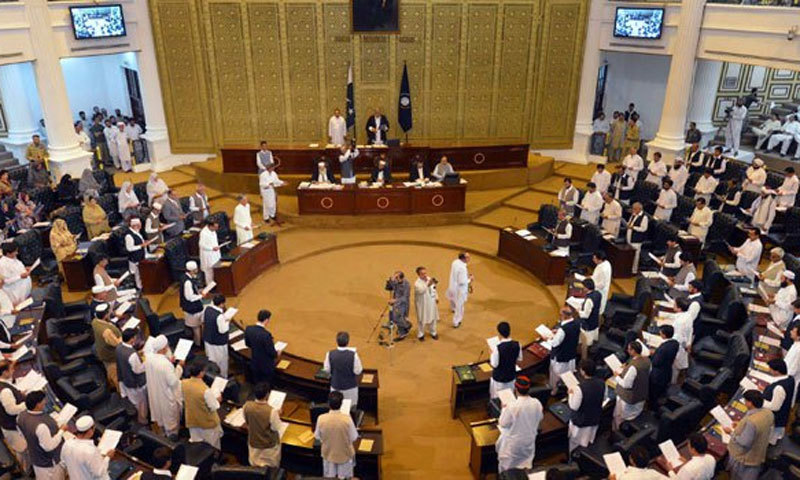

PESHAWAR: The Khyber Pakhtunkhwa Assembly on Tuesday hastily passed a bill for making drastic changes to a health reforms law empowering the chief minister to appoint and remove members of the board of governors of medical teaching institutions in the province.
The KP Medical Teaching Institutions Reforms (Amendment) Bill, 2020, also provides for the establishment of an appellate tribunal to decide legal matters about MTIs.
The opposition members flayed legislation without debate.
Health minister Taimur Saleem Jhagra introduced the bill, which was passed by the house during the session chaired by Speaker Mushtaq Ahmad Ghani.
The MTI Reforms Act was enforced in 2015 to grant financial and administrative powers to teaching hospitals to improve patient care and do away with political interference in their affairs.
PA hastily passes changes to health reforms law amid opposition’s criticism
However, many issues cropped up later prompting several amendments to the law by the assembly from time to time.
Under the existing law, members of the MTI BoG are to be appointed by the government (cabinet) on the recommendation of the search and nomination council.
The approved bill provides for the appointment of board members by the chief minister on the recommendation of the search council for a period of three years. It also empowers the chief minister to remove members even before the completion of their term.
According to the amended law, an appellate tribunal consisting of a chairman and members as prescribed by rules will be established.
“All employees of an MTI shall have the right to file an appeal before the appellate tribunal against any penalty, termination of their employment or any order in connection with their terms and conditions of service.”
The bill also empowers the provincial government to revert an MTI to its previous status to run it under own administration and management.
A large number of retired people are not getting pension as no department takes responsibility. The bill declares who is responsible and where the money will come from for pension.
Speaking on a point of order, Inayatullah Khan of the opposition Muttahida Majlis-i-Amal said the government should give ample time to lawmakers to study the bill for input.
He said it was not a good practice to table and pass the bill the same day.
The lawmaker said the last session, too, witnessed the passage of several bills within minutes without debate to the concern of the opposition.
“The Speaker had assured the opposition members that the practice of hasty legislation will not be repeated, but that didn’t happen and drastic changes have been introduced to the MTI law without deliberation,” he said.
Another MMA member, Maulana Lutfur Rehman, said the proposed amendments to MTI law should have been placed before the house for debate as legislation without debate was not a good practice.
“Senior politicians are sitting on the opposition benches, who can give good suggestions to the government regarding MTIs,” he said.
Nighat Yasmin Oragzai of the PPP and Naeema Kishwar of the MMA also expressed concern about the passage of bills without debate.
The house unanimously passed a resolution demanding of the federal government to restore Internet facility in tribal districts of the province.
The resolution tabled by MPA Mir Kalam Khan from North Waziristan claimed that students in tribal districts couldn’t attend online classes unlike those enrolled in other parts of the country.
By passing another resolution, the house demanded the introduction of the Holy Quran with Urdu translation in universities.
Tabling the resolution, MPA Inayatullah Khan of the MMA said the understanding of the Holy Quran would bring positive changes to the lives of students.
The chair adjourned the session until Friday.
Published in Dawn, July 8th, 2020