Israel must face consequences over planned West Bank annexations, says Palestinian PM

Israel must face consequences if it annexes land in the occupied West Bank, Palestinian Prime Minister Mohammad Shtayyeh said on Tuesday, pointing to possible European sanctions.
Israeli Prime Minister Benjamin Netanyahu has pledged to extend Israeli sovereignty to Jewish settlements and the Jordan Valley in the West Bank, territory Israel took in the 1967 Middle East war and which Palestinians seek for a state.
Netanyahu’s new government is due to begin discussing the de facto annexation on July 1, but it is unclear whether Israel’s main ally, the United States, would greenlight the step.
The Palestinians have rejected US President Donald Trump’s peace blueprint, announced in January, under which most of the settlements Israel built would be incorporated into “contiguous Israeli territory”.
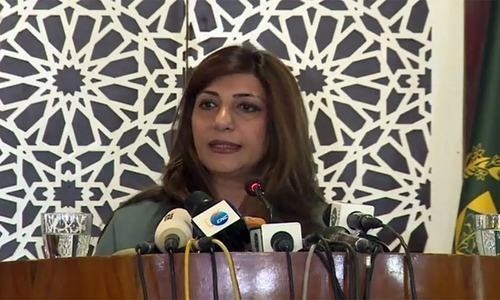
At a news conference, Shtayyeh said annexation would kill any possibility of peace with Israel and erode “the Palestinian, regional and international consensus” on a two-state solution.
He said Israel must now “feel the heat of international pressure”.
European states, Shtayyeh said, were debating “sanctions on Israel and freezing association agreements, as well as cancelling some research programmes” and “recognising Palestine” as a state in the West Bank and Gaza.
Most countries view Israel’s settlements on occupied land as illegal. Israel disputes this. Palestinians now exercise limited self-rule in parts of the West Bank while Palestinian Islamist group Hamas rules tiny Gaza.
But Shtayyeh said the 27-nation European Union’s consensus decision-making was “a bit complicated”, and one or two countries were not in line with others on the issue.
An EU spokesman in Jerusalem declined comment on Shtayyeh’s remarks but pointed to an earlier statement from EU foreign policy chief Josep Borrell which said that annexation, “if implemented, could not pass unchallenged”.
Without giving details, Shtayyeh said that the Palestinians have submitted a counter-proposal to Trump’s plan to the Quartet of Middle East mediators — the US, Russia, the EU and United Nations.
The Palestinians have declared agreements with Israel void in protest against annexation.
Shtayyeh said his government’s rejection of taxes collected by Israel on its behalf meant salaries would not be paid to some 130,000 public workers.
Israelis protest annexation plan
Meanwhile, several thousand Israelis have demonstrated against Netanyahu’s plan to annex Israeli-occupied West Bank.
Protesting in face masks and keeping their distance from each other under coronavirus restrictions, they gathered on Saturday under the banner “No to annexation, no to occupation, yes to peace and democracy”.

Some waved Palestinian flags.
The protest was organised by left-wing groups and did not appear to be the start of a popular mass movement.
Around half of Israelis support annexation, according to a recent opinion poll.
The organisers screened a video address by US Senator Bernie Sanders.
“It has never been more important to stand up for justice, and to fight for the future we all deserve,” Sanders said.
“It’s up to all of us to stand up to authoritarian leaders and to build a peaceful future for every Palestinian and every Israeli," the Vermont senator added.