WHO supports masks where virus widespread, distancing tough


GENEVA: The World Health Organisation on Friday backed the use of fabric facemasks in places where the new coronavirus is widespread and physical distancing is difficult, in a change of advice.
As the deadly virus continues to spread, the WHO issued updated guidance on who should wear a mask, when it should be worn and what it should be made of.
The use of masks has been a hot topic ever since the pandemic first emerged in China in December.
But the UN health agency stressed that facemasks alone “will not protect you from Covid-19” — and people suffering with the virus should not be out in public if they can possibly avoid it.
“In light of evolving evidence, WHO advises that governments should encourage the general public to wear masks where there is widespread transmission and physical distancing is difficult — such as on public transport, in shops, or in other confined or crowded environments,” said WHO chief Tedros Adhanom Ghebreyesus.
In areas with community-level virus transmission, “we advise that people aged 60 years or over, or those with underlying conditions, should wear a medical mask in situations where physical distancing is not possible”, he added.
The WHO maintained its recommendation that people who are sick with Covid-19 symptoms should stay at home and if it is absolutely necessary for them or their contacts to leave home, they should wear a medical mask.
As before, those caring for an infected person at home should wear a medical mask when in the same room; and health workers should wear medical masks plus protective equipment when dealing with suspected or confirmed Covid-19 patients.
But in an update affecting healthcare workers, the WHO now recommends that in areas with widespread virus transmission, all people working in clinical areas of a health facility should wear medical masks — not just those dealing with patients with Covid-19.
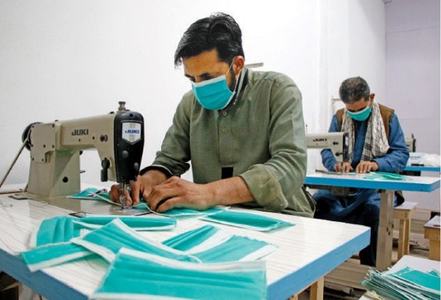
The WHO also issued new guidance on the composition of non-medical fabric masks for the general public, advising that they should consist of at least three layers of different material.
The inner layer should be water-absorbent, such as cotton; the middle layer should be from a material like non-woven polypropylene, and acts as a filter; while the outer layer should be water-resistant, such as polyester.
The WHO’s emergencies director Michael Ryan stressed that putting on a fabric mask is primarily about preventing the wearer from possibly infecting others, rather than self-protection. “It’s an altruistic act,” he said.
Published in Dawn, June 6th, 2020