Tens of thousands evacuated as India, Bangladesh brace for super cyclone


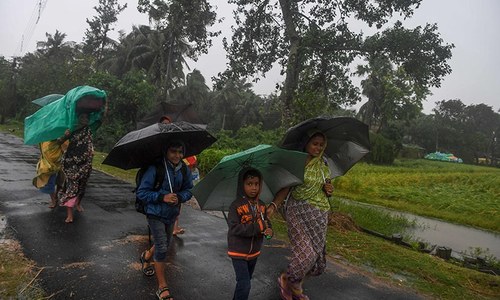
Authorities in eastern India and Bangladesh were scrambling on Tuesday to move tens of thousands of villagers away from coasts expected to suffer widespread damage from a super cyclone, a task complicated by the battle against the coronavirus.
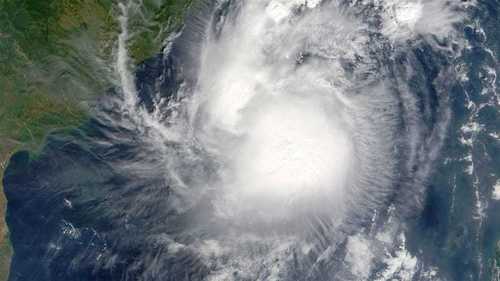
India faces one of its biggest storms in about a decade, the weather office said, as the super cyclone Amphan, equivalent to a hurricane of category 5, is expected to hit its coast late on Wednesday.
“We have just about six hours left to evacuate people from their homes and we also have to maintain social distancing norms,” a disaster management official, SG Rai, told Reuters.
“The cyclone could wash away thousands of huts and standing crops.”
Authorities in the states of Odisha and West Bengal were moving families to more than 1,000 shelters and hastily repurposing quarantine facilities soon after easing the world’s biggest lockdown against the virus, which has infected more than 100,000 and killed 3,163 in India.
Railway officials diverted away from the cyclone’s path trains carrying thousands of migrant workers to eastern states from the capital, New Delhi.
Neighbouring Bangladesh, where the cyclone threatens the worst storm in about 15 years along a low-lying coast, was moving people to higher ground and urging the use of masks against the virus, which has caused 20,995 infections and 314 deaths.
“We have taken necessary steps so that people can maintain distance and wear masks,” said Enamur Rahman, the junior minister for disaster management, adding that 12,000 cyclone shelters were set up to accommodate more than 5 million people.
The cyclone, packing wind speeds of up to 160 kph, could cause tidal waves and heavy rainfall to unleash floods.
It is expected to hit land between the districts of Chittagong and Khulna, just 150 km from refugee camps housing more than a million Rohingya in flimsy shelters.
Aid workers have stockpiled emergency items such as food, tarpaulins and water purification tablets.
“We are really very worried,” said Haiko Magtrayo, a worker of the International Committee of the Red Cross based in the nearby town of Cox’s Bazar.
Hundreds more Rohingya, rescued from boats adrift in the Bay of Bengal, are living on the flood-prone island of Bhasan Char, where two positive virus cases were recorded last week.
Limited space and poor housing leaves refugees extremely vulnerable, Snigdha Chakraborty, an official of Catholic Relief Services, said in a statement.
“There are no evacuation shelters in the camps and we are worried about damage from flooding, wind and risk of Covid-19,” she added.
India, with a coastline stretching 7,516 km, is struck by more than a tenth of the world’s tropical cyclones.