Cyclone kills two as BD, India evacuate two million


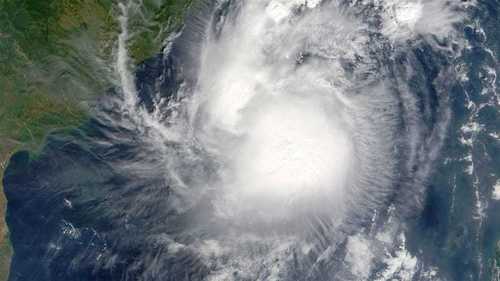
MOUSOUNI ISLAND: Cyclone Bulbul hit India and southern Bangladesh on Saturday, leaving two dead as authorities in the two countries ordered more than two million people to get out of the path of the storm.
The cyclone, packing winds of up to 120 kilometres per hour, “weakened” and “started crossing” India’s West Bengal and Bangladesh’s Khulna coast at about 9pm, Dhaka’s Meteorological Department said in a special bulletin.
“It is likely to move in a north-easterly direction” and “weaken gradually, and may complete crossing West Bengal-Khulna coast by midnight tonight,” the department said.
Airports and ports were shut down and the deaths were reported before the full force of the cyclone had hit.
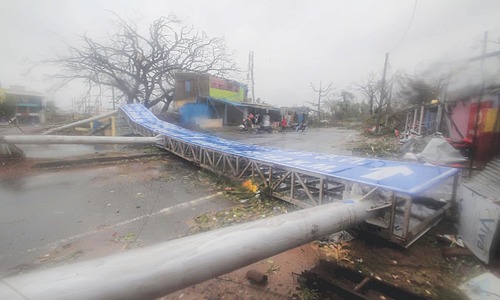
One person was killed by an uprooted tree in Kolkata and another by a wall that collapsed under the force of the winds in Odisha state, authorities said.
More than 60,000 people were moved away from the coast on the Indian side of the border.
Bangladesh disaster management secretary Shah Kamal said that “2.028 million” had been evacuated and moved to more than 5,500 cyclone shelters.
He said there were no reports of casualties and rejected reports in local media that dozens of local fishermen were missing on the southern coast.
Bangladeshi troops were sent to some villages, while about 55,000 volunteers went door-to-door and making loudspeaker announcements in the streets to get people to move away from the danger zone in villages, many of which were below sea level.
A storm surge of up to two metres was predicted along the coast, Bangladesh’s Meteorological Department said.
Published in Dawn, November 10th, 2019