McDonald's hit with sexual harassment complaint at OECD


 10
10


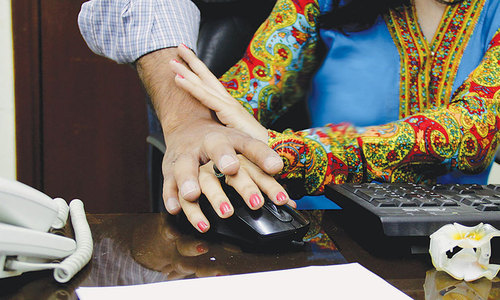
An international group of labour unions said Monday it has filed a complaint against McDonald's for what it called systematic sexual harassment at the fast food chain's restaurants around the world.
The complaint, filed at the Organisation for Economic Cooperation and Development (OECD)'s offices in the Netherlands, was the first of its kind to target a multinational company, its authors said.
"McDonald's workers have sounded the alarm about sexual harassment and gender-based violence for years, but a company with a culture rotten from the top has failed to take meaningful action to address the problem," Sue Longley, general secretary of the International Union of Foodworkers, said in a statement.
"Because McDonald's has neglected to act to create a safe workplace, the Dutch government should make use of this complaint to empower workers to effectively address the rampant harassment they face under the Golden Arches," she said.
The complaint also targets two investment banks, APG Asset Management of the Netherlands and Norges Bank of Norway, which together have holdings worth $1.7 billion in the food giant.
The complainants noted that the OECD's own guidelines "require due diligence by institutional shareholders in companies to ensure responsible business conduct."
The unions said it was the "first-ever complaint brought to the OECD to take aim at systematic sexual harassment at a multinational company."
'McDonald's culture'
The document cites witness testimony of "attempted rape, indecent exposure, groping, and sexual offers."
It said the victims, some as young as 16, "said they were ignored, mocked, or punished when they reported it. Some had their hours cut back and others were fired."
It also cited cases of "touching, forced kissing and other forms of unwanted bodily contact" in branches of the food chain in numerous countries including the United States, Britain, Australia, Brazil, Chile, Colombia, and France, among others.
In France, it cited a case in which a McDonald's manager allegedly "installed a cellphone camera in the women's changing room, and secretly filmed young women changing their clothes."
"Gender-based violence and harassment is part of McDonald's culture," the complaint alleged.
McDonald's said in a statement it would review the complaint when it had received it, stressing that the food giant is a "people-first company.
"There is a deeply important conversation around safe and respectful workplaces in communities throughout the US and around the world," the company said.
"Around the world we believe that McDonald's and its business partners have a responsibility to take action on this issue and are committed to promoting positive change," it added.
Last year, the firm fired its CEO Steve Easterbrook for having a consensual relationship with a member of staff in violation of company policy.
The complaint will be examined by the Dutch government, which has up to three months to decide whether to launch a process of mediation with the company.
The OECD does not have the power to fine or penalise the company, said Lance Compa, an expert on international labour law.
But the complainants hope mediation "could lead to an agreement and a template for McDonald's operations around the world," and in particular to allow "workers to bring their own experiences and ideas to the table to help shape policies to combat harassment and gender-based violence."
The unions, which include the European Federation of Food, Agriculture and Tourism Trade Unions and the Service Employees International Union of the United States and Canada, said they brought the case in the Netherlands because in the United States, where the company is headquartered, McDonald's "insists it has no responsibility for employment conditions, employment relations, or workplace abuses in the more than 90 percent of its stores operated by franchisees."
The unions chose the Netherlands because it is the "nerve centre" of the fast food giant's European operations, and also the headquarters of APG bank.
McDonald's is the largest restaurant chain in Europe, where it employs almost 500,000 people, 90 percent of them working in franchises.