

War-torn Yemen confirms first coronavirus case; braces for outbreak

Published
4
Nurses receive training on using ventilators at the intensive care ward of a hospital allocated for coronavirus patients in preparation for any possible spread of the disease in Yemen April 8. — Reuters

Yemen reported its first case of the novel coronavirus on Friday as aid groups try to prepare for an outbreak in a country where war has shattered the health system and spread hunger and disease.

The news came after a nationwide ceasefire began on Thursday over the virus pandemic.

A Saudi-led coalition fighting Yemen's Houthi movement announced it would halt military operations for two weeks, but the Houthis have yet to agree.

Read: What impact is Covid-19 having on Middle East conflicts?

The case was diagnosed in the southern oil-producing region of Hadhramout, the supreme national emergency committee said on its Twitter account.

“The individual is stable and receiving medical attention [from] the medical teams,” it said, adding that authorities had taken necessary measures, but did not give details.

The patient is a Yemeni working in the port of Ash Shihr, a local official told Reuters.

If the virus spreads in Yemen, the impact would be “catastrophic”, as the health status of at least half the population is “very degraded” and the country does not have sufficient supplies, capabilities or facilities, its UN humanitarian coordinator, Lise Grande, told Reuters on Thursday.

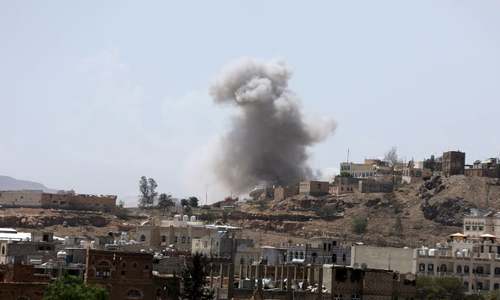
Yemen has been mired in violence since the Houthi movement overthrew the government in the capital, Sanaa, in late 2014, prompting the Saudi-led coalition to intervene.

The five-year-old conflict has killed more than 100,000 and pushed millions to the brink of famine.
Opinion

Editorial

Muddled hierarchy
Updated 15 Nov, 2026

Muddled hierarchy

The jurisdiction of the two courts and a mechanism for settling disputes between them should be spelt out in law, not left to judges to fight over.
Growing crisis
Updated 15 Nov, 2026

Growing crisis

Calling population growth a national emergency is easy. Ensuring that the response reaches the people who need it is the real challenge.
Organised rackets
15 Nov, 2026

Organised rackets

ON the International Day against Transnational Organised Crime, observed today, Pakistan finds itself in a tight...
Referendum talk
Updated 14 Nov, 2026

Referendum talk

Unless the PPP is deliberately using Sindh as a bargaining chip, it should issue a clarification with a clear, consistent position on new administrative units, not one tailored to protect its home turf.
Mineral wealth
Updated 14 Nov, 2026

Mineral wealth

Minerals should not be presented as a solution to Pakistan’s long-term economic difficulties. The aim should be to build an industrial base rather than export raw materials.
Late diagnosis
14 Nov, 2026

Late diagnosis

AS we mark World Diabetes Day today, Pakistan faces a troubling question: how many people are living with diabetes...





















