Gas shortage brings untold misery to consumers


 2
2


THE winter season has almost drawn to a close but some parts of the provincial capital are still facing a shortage of natural gas. Many areas in the centre of the city do without gas for several hours each day. The situation is worse on the outskirts of the city, even though the Sui Southern Gas Company says there’s no longer a shortage.
The people of Killi Qambrani, a suburban area to the south of Quetta, have had to contend with the problem right from the start of the season and are still doing so. In the month of January, Quetta was blanketed with snow, which turned the weather frosty. With the fall of snow, the supply of gas to the residents was almost discontinued.
Kashif, 18, the sole son of a Punjabi mother, belongs to this area. Over the years, he worked as a helper in various offices in the city, earning between Rs15,000 and Rs20,000 a month. This winter, however, due to some health complications, Kashif decided to quit his job and stay at home instead. Before quitting his job, he had about Rs50,000 in savings.
As is common in our society, his mother wanted to get him engaged as soon as possible because she wanted to “see him marry someone before her (own) death”. Although the pension of Kashif’s late father Liaquat Ali, who worked as a driver in the health department, is a pittance the mother and son thought it was sufficient to fullfil their household needs.
Meanwhile, Kashif’s mother found a girl who was to get engaged with Kashif after the end of the season. The expenditure the two families agreed upon for the ceremony was Rs80,000, which Kashif was to bear at the time of engagement.
However, as the weather grew worse in January and February, Kashif’s condition deteriorated. Instead of staying at home most of the time, he had to visit both private and government-run hospitals for his treatment. As a result, his savings were depleted within a short period. In time he had to take loans from his friends to meet his growing medical expenses.
I met Kashif in late February, on a busy Monday, in the Waris Hotel, situated near the city’s famous Jinnah Road. He looked neat and clean and was wearing a black woollen coat over a shalwar-kameez. He had a muffler with which he covered his neck and a part of his face to keep himself warm. Even though his mouth was covered most of the time, I could make out that he smiled several times during our conversation.
Even though he had not fully recovered from the condition he suffered from each winter, his health had improved somewhat lately, Kashif told Dawn. He explained that his health deteriorated every winter amidst the gas shortage and loadshedding in the city.
In the severe cold he could neither sit down nor keep standing in his room. “All I could do was wrap up my body with one or two blankets all the time,” he said.
“In a week, I had to go to hospital twice.” Answering a question, he said he had chest complications and a sore throat. But he couldn’t give me the name of the disease he was suffering from. “I vomited at times,” he added.
Balochistan was actually the first province in the country where gas was first discovered. Gas reserves were found back in 1952 in the Sui town of Dera Bugti district. Unfortunately, Quetta was provided gas not until 1985, which speaks volumes about the injustices faced by the province. Today, only five districts out of Balochistan’s 34 districts are connected to the national grid.
This winter was a particularly harsh one, particularly for the province’s nine districts. Because it snowed frequently many people lost their lives and many others were marooned in the snow. Also, many heads of cattle died due to the harsh weather.
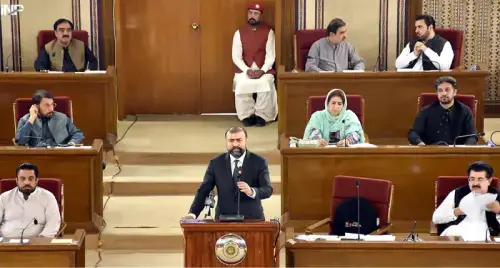
All the nine MPAs from Quetta, along with their colleagues in the Balochistan Assembly, mounted protests against the unabated gas loadshedding in the city. Unfortunately, their entreaties and appeals fell on deaf ears.
In the month of March, weather turns pleasant in Sindh. About half of Kashif’s extended family lives in Sukkur district, where he spends some time with his mother’s relatives. This time too he and his mother decided that they should go to Sindh.
Before leaving for Sukkur, Kashif’s mother went to the house of the girl who was to be engaged to him. Even before she could broach the subject of Kashif’s engagement, she was told in certain terms that they could not wait any longer. The girl’s family simply refused to give her hand to Kashif because he was jobless, and more importantly, because he had been unable to collect the money required for the engagement ceremony.
Published in Dawn, March 9th, 2020