Islamabad hails Tehran for slamming violence against Indian Muslims

ISLAMABAD: Iran’s denunciation of Hindu extremist violence against Muslims in Delhi was on Tuesday welcomed by Pakistan and rejected by India.
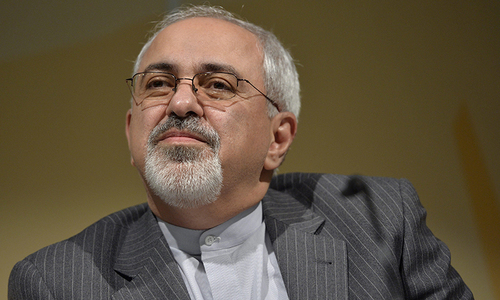
Iranian Foreign Minister Javad Zarif on Monday condemned the “organised violence” against Muslims in India calling it a “senseless thuggery”.
He asked the Indian government to ensure “wellbeing of all Indians” and “rule of law”, while addressing the situation through “peaceful dialogue”.
Foreign Minister Zarif’s Twitter comment was about a series of riots and violent incidents that took place in Delhi on the night of Feb 23 in which dozens of people, mostly Muslims, were killed.
Mobs associated with extremist Hindu nationalist groups ransacked properties owned by Muslims and mosques. Copies of the holy Quran were also burnt by vandals.
Iran’s FM Javad Zarif on Monday condemned organised violence against Muslims in India, calling it a senseless thuggery
Foreign Minister Shah Mahmood Qureshi welcomed Iran’s statement.
“Fully share the concerns expressed by my brother @JZarif on safety and well-being of Indian Muslims facing naked violence from RSS mobs. India is in throes of grave communal violence. Their sinister & systematic killing of Muslims is inhuman & dangerous for whole region,” Mr Qureshi tweeted.
It should be recalled that very few countries spoke against the violence perpetrated by Hindu extremists against Muslims with Indian government’s tacit support. Before Iran, only Turkey from among the Muslim countries had vocally condemned the attacks.
Mr Zarif’s tweet, however, irked India.
Iran’s Ambassador to Delhi Mr Ali Chegeni was on Tuesday summoned to the Ministry of External Affairs to receive a protest over Foreign Minister Zarif’s comment on social media.
The Iranian envoy, according to media reports, was told that Mr Zarif’s comment were “totally uncalled for and unacceptable”.
He was further conveyed that Indian leadership was dismayed and disappointed by Iranian foreign minister’s comments on India’s “internal matters”.
In a statement the Indian ministry said: “It was conveyed that his selective and tendentious characterisation of recent events in Delhi are not acceptable.”
Responding to some of the earlier criticism, it had on Feb 27 told the world not to make “irresponsible comments” at “this sensitive time”.
The Iranian government has in the past mostly avoided comments that could antagonise India because of its strong trade and economic ties, but the situation changed when Iran’s Supreme Leader Ayatollah Seyed Ali Khamenei criticised India for repression in Kashmir.
More recently, Ayatollah Khamenei had after the annexation of occupied Kashmir in August 2019 urged the Indian government “to adopt a just policy towards the noble people of Kashmir and prevent the oppression and bullying of Muslims in this region”.
Published in Dawn, March 4th, 2020