0
0

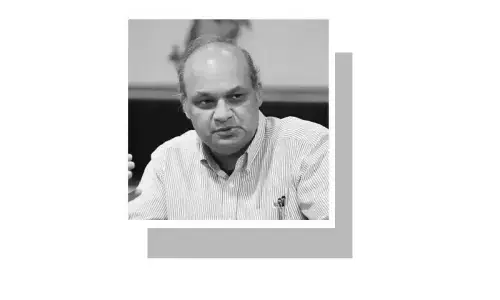
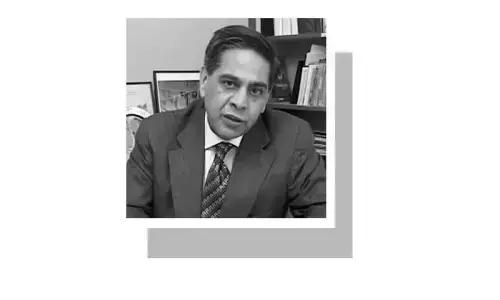
KARACHI: Dr Umair Javed, a teacher of politics and sociology at Lahore University of Management Sciences, on Sunday said the whole Pakistani society, and not just the state itself, had marginalised critical intellectual thought.
“The state plays an important role; there can be no doubt about it. It controls the purse strings and the largest stick, which is wielded very often. But the broader sublimates of statist, nationalist, centralising political and cultural discourse seep into society through a variety of channels,” said Dr Javed while delivering the 20th Hamza Wahid Memorial Lecture on the topic of ‘Between coercion and hegemony: the state of social science education in Pakistan’ at PMA House.
The programme was organised by the Irtiqa Institute of Social Sciences.
He said the mainstream media outlets, having been nested within the ‘barren intellectual climate of the previous two decades’ now continued to enable the same conceptions that discouraged critical thought within new generations.
“These also include a variety of other regressive social groups, many of whom were once patronised by institutions of the state, but have now entrenched their position on account of being well-organised, well-resourced, and well-networked, especially within urban settings.
“These tendencies have now also transcended the domain of publicly run universities, and are now reproduced wholesale in the rapidly growing domain of low and middle-cost private universities as well.
He said there were 196 chartered general-purpose universities in Pakistan. Most of them offered courses in humanities and social sciences, including history, philosophy, sociology, and political science.
“A brief look at the statistics revealed that there are over 200,000 students [are] enrolled in these programmes. The total number of faculty teaching in these programmes is likely to number around 10,000.”
Dr Javed said Pakistani social scientists and humanities scholars were not publishing widely in international journals.
“Pakistani scholars are not a part of international debates or even regional ones for that matter. A brief review of the political science curriculum at one of the largest universities in the country shows that it has not been updated since the early 1990s. We also know that many of the students trained at these universities suffer from extensive employment issues.”
He said at the heart of a good education in the social sciences was the usual critical thinking ie the ability to interrogate the world around oneself, reflect on it, engage with it and contribute something to it.
“For a social scientist or a humanities scholar the truth at the heart of the inquiry and the lab itself is society around us. It is thus impossible for such scholars, if they actually engage in good scholarship, to not have a spillover effect and broader social life.”
He said the critical thinking had already become the ultimate casualty in Pakistan.
“The situation in Pakistan is very clear from this perspective. Critical thinking is something that is simply absent from the broader social formation. Whether it is on issues of governance, morality, culture or simply issues of personal conception and identity, there is a considerable dearth of reflection, intellectual engagement, and thus of reform,” said the scholar who did his doctorate at the London School of Economics and Political Science.
“We remain as a society in a figure state, a reality by the lack of worthwhile intellectual output from the very arenas designed to induce critical thought.”
He said the decline of the social sciences education Pakistan was the wholehearted embrace of neo-liberal capitalism by both the state, and consequently, the wider social formation itself.
He said that embrace existed since 1960s and had accelerated over the last two decades.
“The neo-liberalism has changed the meaning of education and what it means to acquire education to a purely vocational domain. Now, one goes to the university to acquire skills that can be transacted in the labour market for remuneration and to satisfy desire of upward mobility.”
He said Pakistan topped in consumerism that had badly affected the education and now the programmes and disciplines were being designed at universities in accordance with the market demand.
“These universities, both private and public, are simply attempts to satisfy socially constructed market demand. They are not designed to engage with questions that are relevant for intellectual requirements of a society; nor are they in the business of cultivating critical thinking skills. They are only in the business of awarding credentials.
“The hegemony of education that serves vocational ends has thus crept into every corner of the country.”
He, however, ended his lecture at the optimistic note vis-à-vis the counter-hegemonic possibilities in the Pakistani society given the legacy of resistance prevalent in the country since its inception.
He said resistance at various levels of society offered silver lining as well as the rising student movement of progressive organisations “who are committed to reintroducing critical thinking on campuses, and improving the quality of education they receive”.
Veteran progressive activist Mazhar Saeed presided over the programme.
Published in Dawn, March 2nd, 2020