MoU signed for electronic data exchange with Iran


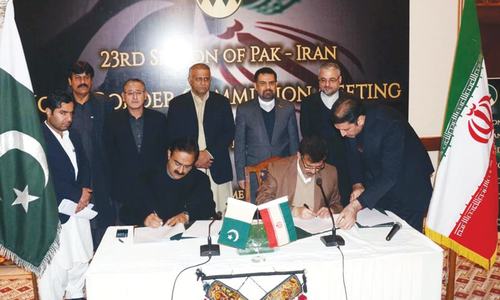
ISLAMABAD: Pakistan and Iran on Monday signed a Memorandum of Understanding (MoU) for electronic data exchange between the Customs authorities of the two countries on real time basis to control under and over-invoicing on goods.
Pakistan Member Customs Javed Ghani and Iran’s Director General of Information Technology Department Haideh Bagheripour signed the MoU on behalf of their respective countries. Acting Chairperson Federal Board of Revenue (FBR) Nausheen Javaid Amjad and Ambassador of Iran in Pakistan, Mohammad Ali Hosseini were also present on the occasion.
The much-awaited MoU is the outcome of the Customs Mutual Assistance Agreement that was signed between the two countries on March 4, 2004. Before signing the MoU, the customs authorities of the two countries already held two rounds of meetings in 2019.
Under the agreement, it was also emphasised to exchange values/documents on real time basis in case of the goods to be imported/exported and to roll-out a fully automated clearance system, having advance information, about goods/passengers at the Taftan-Mirjaveh Border stations (as a pilot project) and at other border stations in a phased manner.
Ms Amjad said the implementation of this MoU will have a number of benefits for both Iran Customs and the FBR including the availability of advance information about values, descriptions and quality of the goods to be imported into Pakistan from Iran and reduced costs on clearance of goods at the borders.
Moreover, accurate valuation of the imported goods will lead to realisation of greater revenues, she said.
Mr Ghani said the proposed cooperation through the MoU would go a long way in fostering a long-term relationship between both customs administrations and would enable them to successfully cope with the challenges that they are facing.
Implementation of the MoU would ensure optimum trade facilitation through quick examination/assessment of the imported goods and more transparency and lesser human interface, he said. He assured the Iranian Customs of full cooperation from Pakistan on any area pertaining to mutual assistance and collaboration.
The Iranian ambassador appreciated the signing of the MoU and expressed his pleasure over the fact that there are a number of important areas wherein both customs administrations can work together in the best interests of Iran and Pakistan.
Published in Dawn, February 11th, 2020