Occupied Kashmir observes strike to mark execution anniversary of Afzal Guru


 21
21
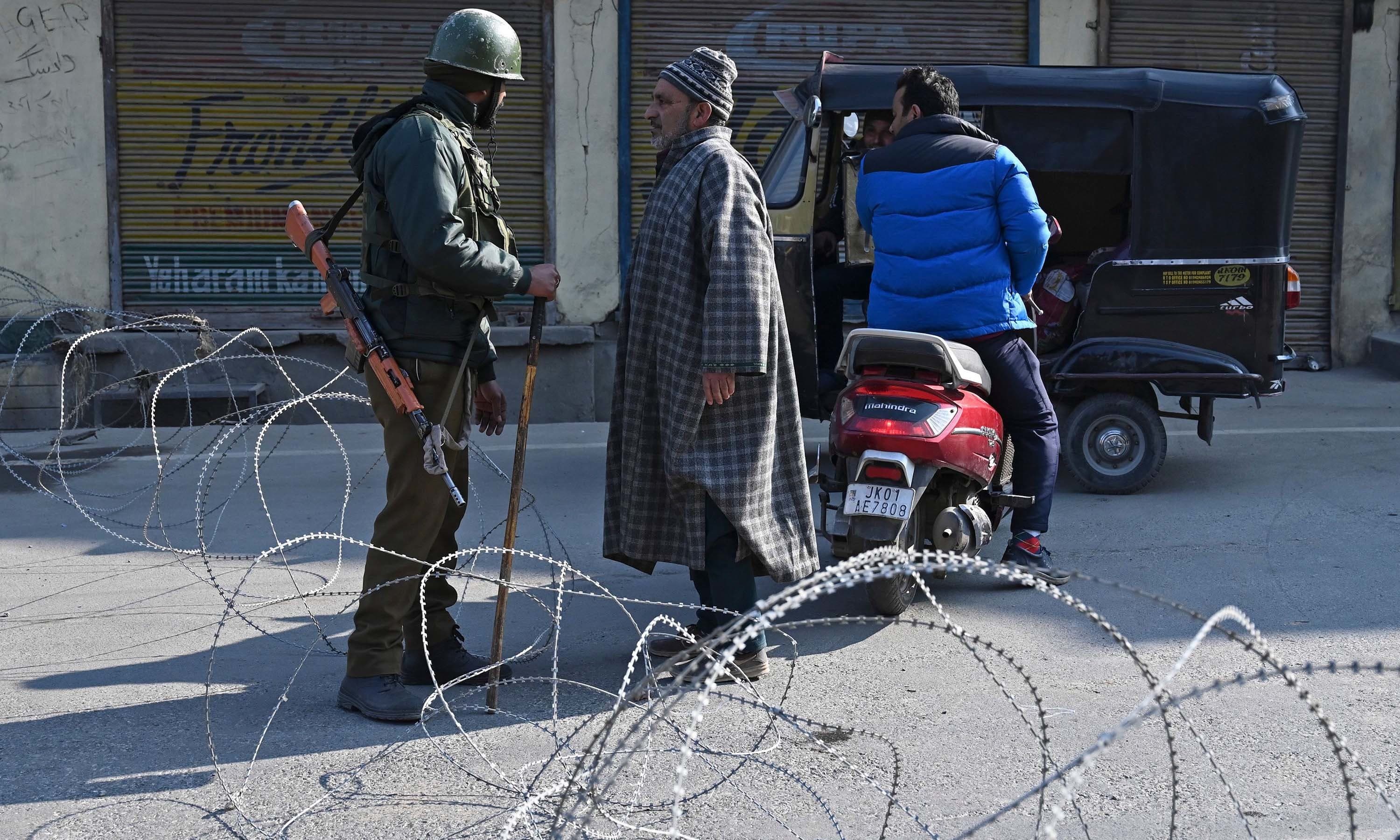

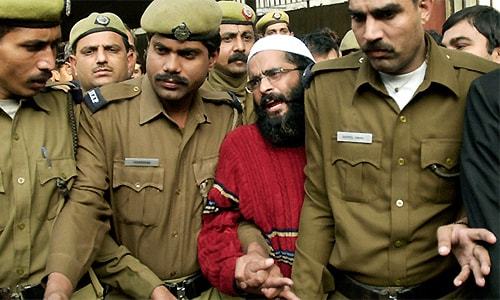
Shops and businesses were shut in occupied Kashmir on Sunday and authorities imposed a lockdown in some parts of the region's main city after Kashmiri fighters called for a strike to mark the execution anniversary of a Kashmiri fruit vendor, Mohammed Afzal Guru, who was convicted for an attack on the Indian parliament in Delhi.
Hundreds of police and paramilitary soldiers patrolled largely deserted streets in Srinagar. Authorities put old parts of the city under lockdown, with major roads blocked by razor wire and barricades in anticipation of anti-India protests and possible violence. Public transport was largely off the roads.
Most Kashmiris were incensed when in 2013, Guru was secretly hanged in a New Delhi jail on charges of being involved in the December 2001 parliament attack that killed 14 people, including five gunmen.
Guru was on death row for 11 years. His family received a letter informing them of his imminent hanging two days after he was dead, but the letter, dated Feb 6, 2013, was mailed on Feb 8, a day before Guru's execution.
Most people in occupied Kashmir believe Guru was not given a fair trial, and the covert execution led to days of deadly anti-India protests in the Muslim-majority region, where anti-India sentiment runs deep.
Kashmiri fighters have also called for a strike on February 11 to mark the day in 1984 when pro-independence leader Mohammed Maqbool Butt was hanged in the same New Delhi jail after being convicted of killing an intelligence officer.
Kashmiri fighters demand that the two men's remains, buried within the jail compound, be returned to the region.
Meanwhile, police on Saturday summoned two journalists for questioning in Srinagar for reporting about the strike call given by the Jammu-Kashmir Liberation Front.
The Kashmir Press Club called it harassment.
"It has become a routine with police to summon journalists for their stories," said Ishfaq Tantray, the club's general-secretary. "It is an attempt by the law enforcement agencies to define new terms of journalism in Kashmir. They're trying to define to us what we should report and how we should report."
Police in a statement said they registered a case against the Kashmiri fighters' group for "attempts to incite violence and disturb law and order situation".