Security lapse blamed for polio workers’ killing in Swabi

PESHAWAR: A three-member committee, formed on the directives of chief minister to hold a fact-finding probe into the killing of two lady health workers in Swabi district last week, has said in its report that security lapse made the slain vaccinators a soft target.
The report submitted to the chief minister says that there were 17 polio vaccinating teams in Parmoli union council of Swabi but security arrangements were not up to the mark despite devising a plan for polio vaccinators 10 days ago.
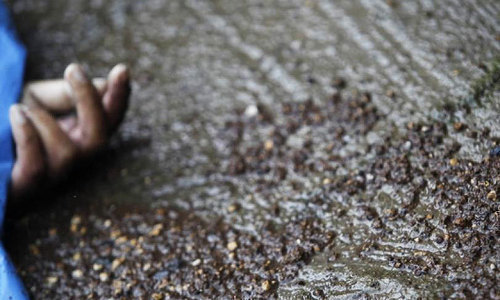
There was no security for the teams in the rural area, which allowed the suspected militants to fire at the LHWs. One of them was killed instantly while the other died at the hospital.
On Thursday last, the home and tribal affairs department formed the fact-finding committee, including the special secretary of home department, Islam Zeb, DIG Kashif Alam of police department and Sharif Hussain, the additional secretary of home department, to identify security lapse during the incident and propose suitable action to avoid such mishaps in future.
Panel suggests provision of foolproof security to health workers in future
Officials said that the police deployed 29,000 teams in every polio campaign to provide protection to polio workers in door-to-door drive but in Parmoli, where the latest incidence occurred, the vaccinators lacked security. The committee has recommended foolproof security for vaccinators in future to avoid such mishaps.
Pakistan is struggling to eradicate poliomyelitis as it recorded 140 cases, highest by any country in the world in 2019. Khyber Pakhtunkhwa recorded 92 polio cases that set alarm bells ringing for the government and partner agencies to speed up efforts to eradicate the virus and safeguard the children. In 2010, eight polio cases, including three from the province, have been reported.
The frontline workers, who knock every door in the campaign to administer oral polio vaccine (OPV) to children, have suffered casualties in Khyber Pakhtunkhwa but in none of the incidents the perpetrators have been brought to justice.
Since 2012, when militants began targeting polio teams, a total of 47 people have been killed in incidents linked to polio vaccination in Pakistan.
The dead included 36 polio workers and 11 security men. In Khyber Pakhtunkhwa 25 persons have been killed including 18 polio workers and seven policemen.
The panel has also found that the security situation gets lose when no incident occurs for long. The last incident where two workers were murdered happened two years ago. There was a firing incident in Dir some two months ago when the policemen were proceeding to join the teams and were away from the spot.
Health workers say that they have been taking part in the polio drives for which they are paid Rs700 per day. It means that they get Rs28,000 for working four days from dawn to dusk.
On the other hand, the people sitting in offices and making plans get millions in salaries from donor agencies while the workers, who are the real force, lack transport and other facilities.
The government as well as the donor organisations, including WHO, Unicef and others admit the sacrifices of the polio workers, policemen and paid volunteers during the campaigns but don’t bother to scale up their wages.
Most of the LHWs and health workers are not willing to take part in the campaigns and put their lives at the razor’s edge but they are forced by the respective department to be part of the drive.
Published in Dawn, February 7th, 2020