How have governments reacted to the coronavirus outbreak in China?



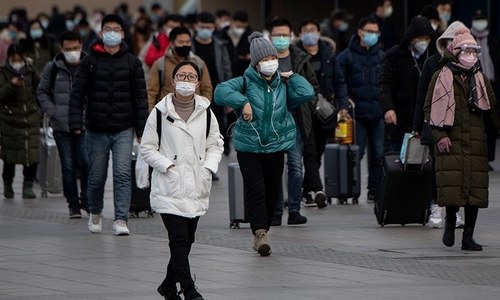
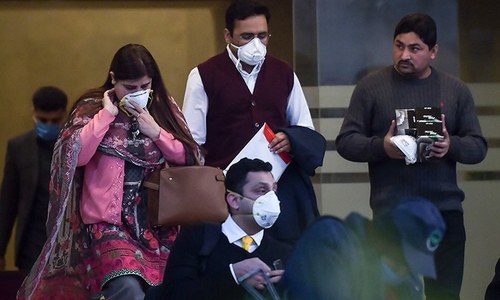
The coronavirus outbreak has killed more than 300 people and infected more than 14,000 in mainland China and beyond, forcing governments around the world to take drastic measures.
From border closures to flight bans, here are some of the steps states have taken to limit the spread of the virus:
Travel bans
The United States on Friday temporarily banned the entry of foreign nationals who had travelled to China over the past two weeks.
Major restrictions were also placed on US nationals, with mandatory 14-day quarantines for those returning from the Chinese province at the epicentre of the outbreak.
The only foreign nationals exempted from the ban are immediate family members of American citizens and permanent residents.
Australia and Israel followed suit with a similar ban on non-citizens who have travelled to China in the last 14 days.
New Zealand, Singapore, Malaysia, the Philippines and Mongolia have announced similar restrictions on people travelling from China.
Various airlines have halted flights to China. Pakistan on Friday halted flights to and from China with immediate effect, a civil aviation official said, as the death toll from a virus outbreak spreading in China mounted and the World Health Organisation called it a global health emergency.
Border closures
Some nations have closed their borders with China in a bid to protect their territory from the outbreak.
Russia said on Thursday it was closing its frontiers with China in the Far East, while Kazakhstan has halted cross-border bus and passenger train services to China.
Mongolia has closed its border with China to cars, while North Korea — an isolated nation which relies heavily on its links with China — banned foreign tourists.
Vietnam on the weekend announced a suspension of all mainland China flights.
Nepal closed its Rasuwagadhi checkpoint on the Chinese border for 15 days starting January 29.
Papua New Guinea went further than the others: it shut its air and seaports on Wednesday to all foreign travellers coming from Asia. The impoverished nation also shut its only land border with the Indonesia-controlled province of West Papua.
Visa bans for Chinese
A number of countries have temporarily stopped issuing visas to Chinese nationals after the coronavirus outbreak.
Singapore has stopped issuing all types of visas to Chinese travellers, while Vietnam — a popular destination for Chinese tourists — has halted tourist visas.
Russia, a close Beijing ally, announced on Saturday it would halt visa-free tourism for Chinese nationals and also stop issuing them work visas. It had already stopped issuing electronic visas to Chinese nationals that allowed them to cross the border in parts of the Far East and western Russia.
Similar visa restrictions of varying scale have been imposed by the Philippines, Sri Lanka, Malaysia, and the African nation of Mozambique.
Diplomatic outreach
The Ministry of Foreign Affairs for China on Saturday took to Twitter to thank all the countries — Russia, Pakistan, Republic of Korea, Belarus, France, Germany, Malaysia — and Unicef as well as others for "providing assistance and support to China" in helping in the fight against the virus.
Deputy Director General, Information Department of the ministry Lijian Zhao also shared updates of phone calls between China's State Councilor and Foreign Minister Wang Yi and his counterparts including a phone call with Foreign Minister Shah Mehmood Qureshi.
A Foreign Office statement said the Chinese foreign minister told Qureshi that the Chinese government was extending all possible assistance to the Pakistani community and "facilitating them like its own citizens", according to the statement. He said the WHO had praised the Chinese government's response to the virus outbreak.
Wang also detailed the precautionary measures taken by the Chinese government to contain the spread of the virus.
According to the handout, Qureshi had expressed satisfaction at China's efforts to deal with the outbreak and thanked the Chinese leadership for paying "special attention" to the Pakistani community in the country especially students.
"Pakistani people and government are standing with the Chinese government and people in this difficult hour," Qureshi said.