0
0

KARACHI: We need to change the concept of emergency medicine (EM) in Pakistan and increase the number of trained EM physicians. There should be two-year certification, one-year diploma or MCPS in EM. Local curriculum according to the needs of the country should be developed and a unified training system is needed.
These are some of the main points highlighted at the 3rd annual symposium on ‘Emergency medicine: shaping the future of emergency medicine in Pakistan’ hosted by the Dr Ziauddin Hospital and Ziauddin University.
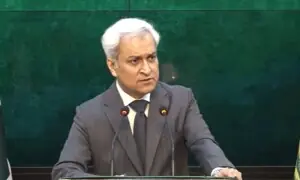
Addressing the participants in symposium, keynote speaker of the event Dr Abdus Salam Khan, MD FACP, president of the Pakistan Society of Emergency Medicine, said the government should introduce trained physicians to manage emergencies especially in rural areas and streamline all training activities to address the needs of the country.
‘Wearing seat belts can reduce risk of fatalities of front-seat occupants’
Speaking on the subject of pulmonary embolism (PE), Dr Munawar Khursheed, associate professor and director of the emergency department of National Institute of Cardiovascular Diseases, said: “Under massive pulmonary embolism 50 per cent people have chances to die within 30 minutes, 70pc within one hour and more than 85pc within six hours of the onset of symptoms.”
The PE frequently remained undiscovered until autopsy, he added.
“The interval from the onset of symptoms to death is relatively short. Early evaluation and prompt treatment is very important especially in massive pulmonary embolism.”
Talking about Unstable Pelvic Trauma, Prof Amin Chinoy, head of the orthopaedic department, Indus Hospital, said: “Wearing seat belts can reduce the risk of fatalities of front-seat occupants by 45pc since probability of severe head injury and ejection from the vehicle is lower. Chances of fatal/major injuries to head, neck, chest and abdomen are lesser. Except whiplash injury other injuries are of less severity.
“Around three per cent of all fractures in emergency department are the cases we receive of pelvic fractures. We also get to face 15pc patients from motorcycle crashes, 10-30pc from falls, 15pc from car vs pedestrian and crush injuries are 5pc. Associated injuries, including chest injury (63pc), long-bone fracture (50pc), head and abdominal injury (40pc), spine fractures (25pc) and urogenital injuries in 12-20pc. Only two in 14 deaths are directly attributable to pelvic injury,” he added.
Dr Nadeem Ullah Khan, associate professor, department of EM, Aga Khan University, speaking on the topic of palliative care in emergency department while discussing the approaches to care for dying patients said that when it was realised that someone was dying, that should be communicated with them and their family with a lot of care.
“Involve them in decisions. Support them and their family.”
Other speakers while addressing the audience said that emergency physicians should know situations of their emergency departments and handle their patients accordingly.
“We have to be very active in this field to save people’s lives. We have to be careful; we have to take decisions wisely; it’s not about our job, it’s about patient’s safety.”
Earlier, in the welcome address Prof Mahmud Jilani, chairperson of EM Dr Ziauddin Hospital and Prof Abbas Zafar, Dean of Faculty Health Sciences, Dr Ziauddin Hospital, said that objective of the conference was to increase awareness of importance of emergency medicine and its future in Pakistan.
Published in Dawn, January 26th, 2020