Resolution in US Congress seeks end to repression in occupied Kashmir


 6
6


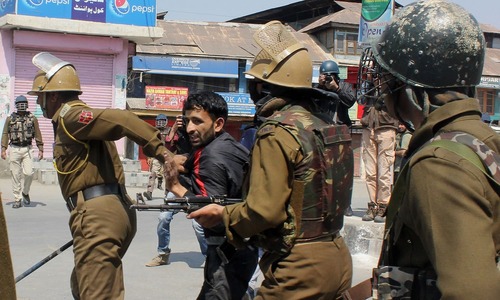
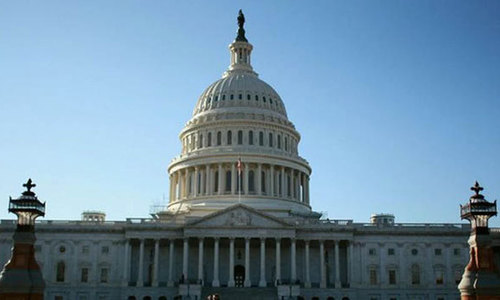
WASHINGTON: A bipartisan resolution moved in the US Congress urges India to end the restrictions on communications and mass detentions in occupied Kashmir as swiftly as possible and preserve religious freedom for all residents.
Resolution 745 was jointly moved on Friday by Congresswoman Pramila Jayapal, a Democrat, and Congressman Steve Watkins, a Republican. Born in Madras (Chennai), Ms Jayapal is the first Indian-American woman to serve in the US House of Representatives. She is also a prominent human rights activist. Mr Watkins is a veteran of the Afghan war and conducted combat along the Afghanistan-Pakistan border.
The movers resolve that the Houses recognises the dire security challenges India faces in Jammu and Kashmir, including “cross-border terrorism,” but rejects arbitrary detention, use of excessive force against civilians, and suppression of peaceful expression of dissent as proportional responses to security challenges.
The resolution urges India to ensure that any actions taken in pursuit of legitimate security priorities respect the human rights of all people and adhere to international human rights law.
It also urges India to lift the remaining restrictions on communication and to restore internet access across the occupied valley as swiftly as possible. The Indian government has been urged to refrain from the use of threats and excessive force against detained people and peaceful protesters and release detained people. It urges the Indian government to refrain from conditioning the release of detained people on their willingness to sign bonds prohibiting any political activities and speeches.
New Delhi has been urged to allow international human rights observers and journalists to access the occupied valley and operate freely throughout India, without threats; and condemn, at the highest levels, all religiously motivated violence, including violence targeting religious minorities.
The resolution reminds India that international human rights law holds that all people have the right to freedom of opinion and expression, including freedom to practice, worship, or observe one’s own religion.
The movers note that on Aug 5, the Indian government cut all telephone service and internet access in the occupied valley.
Published in Dawn, December 8th, 2019