Rising seas threaten village in Philippines


 0
0

DANICA Martinez, 16, grew up in a house that grows taller every few years. Her father raises the stilts of their bamboo hut so water from the sea doesn’t reach the floor. They live in Sitio Pariahan, a coastal village in the Philippines that was once an island, and is now without land. Sitio Pariahan, about 17 km north of Manila, is sinking about 4 cms every year, owing largely to land subsidence from the population’s overuse of groundwater, according to experts. Now rising sea levels caused by global warming could soon make this village unliveable.
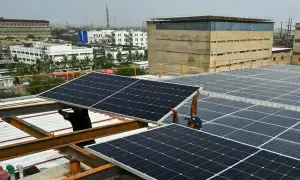
A deep well is the only source of water, and residents use it to bathe, clean, cook and, sometimes, even to drink. Solar panels are installed on many rooftops for electricity, mostly to watch TV. On days that power is low, residents pass the time by gambling. Martinez remembers that their village wasn’t always like this. She recalls basketball tournaments and feasts that their community once held and celebrated mass at the church. The court is now fully submerged and the church stained with moss. Much of the destruction happened when a typhoon struck in 2011. Now, Martinez and her siblings take a 30-minute boat ride to school, sometimes with uniforms drenched by big waves. Her parents rely on their boat to make a living.
Fernando Siringan, a climate change expert, has studied Sitio Pariahan closely, said some delta areas north of Manila were changing rapidly because land was subsiding and water levels rising at the same time. “What is being projected 50 years from now or 100 years from now for many parts of the globe is actually happening right now at even faster rates,” he said. Danica sees no long-term future in what has become like a scene from Waterworld, a 1995 film in which post-apocalyptic tribes live on boats and rafts. “Someday I also want to leave and experience what it’s like to live inland,” she said.
Published in Dawn, December 1st, 2019