Kartarpur corridor shows Pakistan’s commitment to peace: envoy


 8
8


WASHINGTON: The Kartarpur crossing sends a clear message to people across the world — Pakistan is committed to peace, tolerance and inter-faith harmony, says Pakistan’s US envoy Asad Majeed Khan.
In an article published in the Houston Chronicle newspaper on Wednesday, Ambassador Khan notes that the idea for the corridor has been in the works for many years but was implemented by the present Pakistani government.
On Nov 9, Pakistan opened the corridor — a dedicated border-crossing that enables Indian Sikh pilgrims to visit one of Sikhism’s holiest sites, the Darbar Sahib Gurdwara.
Pakistan finished the infrastructure in a record time of 10 months, so that it could be opened during the 550th anniversary of the birth of Guru Nanak, the founder of Sikhism.
“For close to seven decades, Indian Sikhs have been unable to visit Darbar Sahib Gurdwara. This year, the trip should take minutes,” the ambassador wrote.
He pointed out that during the inauguration ceremony Prime Minister Imran Khan said that Pakistan was not just opening its borders, but also its hearts to the Sikh community.
“It seems though that Pakistan’s messages of conciliation continue to fall on deaf ears. On the very same day Pakistan opened the Kartarpur Corridor, India’s Supreme Court denied a historically proven Muslim claim to the Babri Mosque in Ayodhya, India,” the ambassador wrote.
“The site, where a mosque has existed for centuries, has now been handed over to Hindu extremists on spurious claims, sending a chilling message to Muslims and other religious minorities in India.”
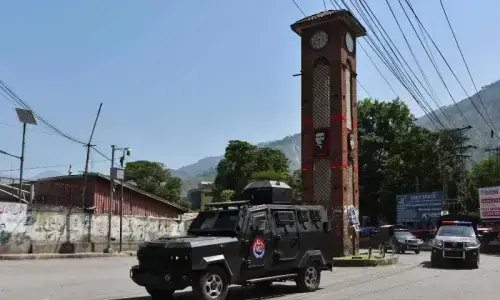
“The stark difference” between Pakistan’s overtures in Kartarpur, and India’s intimidation of Muslims and other minorities, the ambassador argued, “has also been on full display in Indian-occupied Jammu and Kashmir for more than 100 days now.”
He noted that since Aug. 5, when the government of Prime Minister Narendra Modi ended the special status of Jammu and Kashmir, “the besieged Kashmiri people have endured an unprecedented level of state brutality at the hands of India’s security forces.”
Under unyielding lockdown, 8 million Kashmiris have experienced immense suffering under nearly 1 million Indian soldiers, he wrote, adding that many still had no access to hospitals, medicines or food.
Published in Dawn, November 28th, 2019