Cricketers' mental health thrown into the spotlight


Mental wellbeing as much as physical health is emerging as a key challenge for modern-day cricketers — with relentless schedules, intense public scrutiny and the fear of failure weighing heavily.
The issue has been thrust into the spotlight in Australia, where three top players recently stepped aside for mental health reasons, with administrators scrambling to get on top of the problem.
Glenn Maxwell, one of the world's best short-format players, set the tone late last month by taking time away after "experiencing some difficulties with regards to his mental health".
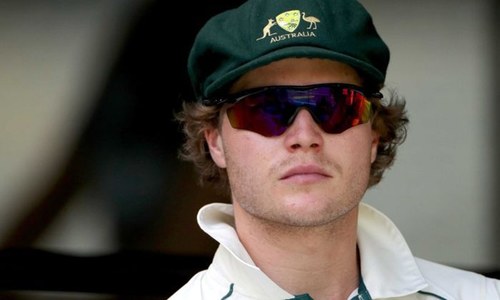
Will Pucovski — who had already taken two breaks to deal with similar issues — and Nic Maddinson followed suit, just a week ahead of the first Test of the Australian summer against Pakistan.
The specifics of their cases are not known publicly, but Ben Oliver, Cricket Australia's head of national teams, said there were a number of factors he had noted, generally, since beginning his job this year.
"One of the early observations I've had in the role is the intense scrutiny and the relentless schedule that exists around cricket," he told SEN sports radio.
"From that perspective, there is an absolute need for us to invest time, energy, resources into understanding the challenges that exist for players and staff around mental health in that context, and making sure we do everything we can."
Test fast bowler Mitchell Starc attributed part of the blame on the modern players' gruelling schedule, with some top stars away from home for months at a time, putting strains on families and taxing friendships.
"You have your pressures around cricket, the schedules are pretty ridiculous these days," said Starc, who is promoting the "Movember" initiative, where moustaches are grown during November to highlight issues affecting men like mental health.
"The positive thing is that guys are feeling perhaps more comfortable, if you like, to be open and honest with how they're feeling," he added.
"In the past guys might have just kicked on and tried to get through things and it could have built up to something worse."
Robert Craddock, a respected cricket writer for News Corp. newspapers, noted that the sport was also very mentally challenging.
"Cricket may not be a physical contact sport but its mental challenges, with so much waiting time, are much tougher than they look," he wrote in a column on Friday.
"Most batsmen fail most of the time so the mental demands can be taxing."
'Silence not the answer'
It is not just an Australian issue.
Ex-England captain Marcus Trescothick quit a tour of India in 2006 and England opener Jonathan Trott left the 2013 Ashes series in Australia after one Test, with both later revealing they had struggled with stress and anxiety.
Superstar India skipper Virat Kohli said this week that he too had suffered and applauded someone of Maxwell's stature going public.
"It has set the right example for cricketers around the world that if you're not in the best frame of mind you try, and try and try, but as human beings you reach a tipping point at some stage or the other," he said ahead of India's first Test against Bangladesh in Indore.
"And you need time away from the game. Not to say you give up, but just to gain more clarity."
Kohli said he went through a difficult period during India's 2014 tour of England when runs dried up and he could not find anyone to confide in.
"I didn't know what to do, what to say to anyone, and how to speak and how to communicate," he said.
The problem for authorities is knowing what measures to introduce to best help players with their mental wellbeing.
Alex Kountouris, Cricket Australia's sports science and sports medicine manager, said the organisation was working hard to understand the causes better.
"There is much society still needs to learn in relation to mental health, but we know enough to say with great certainty that silence is not the answer," he said.
"Cricket Australia has committed to being open about the challenges faced in managing mental health. We are putting player wellbeing first and supporting them unconditionally."