Iran president says new oil field found with over 50bn barrels


 16
16


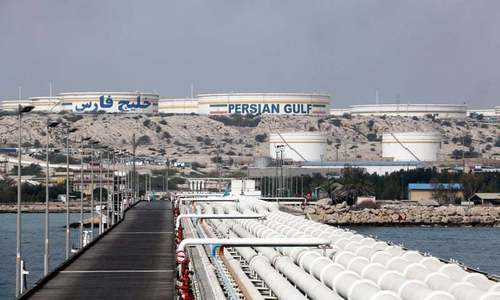
Iran has discovered a new oil field in the country's south with over 50 billion barrels of crude oil, its president said on Sunday, a find that could boost the country's proven reserves by a third as it struggles to sell energy abroad over United States sanctions.
The announcement by Hassan Rouhani comes as Iran faces crushing American sanctions after the US pulled out of its nuclear deal with world powers last year.
Rouhani made the announcement on Sunday in a speech in the desert city of Yazd. He said the field was located in Iran's southern Khuzestan province, home to its crucial oil industry.
Some 53 billion barrels would be added to Iran's proven reserves of some 150 billion, he said. “I am telling the White House that in the days when you sanctioned the sale of Iranian oil, the country's workers and engineers were able to discover 53 billion barrels of oil,” Rouhani said, according to the semi-official Fars news agency.
Oil reserves refer to crude that's economically feasible to extract. Figures can vary wildly by country due to differing standards, though it remains a yardstick of comparison among oil-producing nations.
Iran currently has the world's fourth-largest proven deposits of crude oil and the world's second-largest deposits of natural gas. It shares a massive offshore field in the Persian Gulf with Qatar.
The new oil field could become Iran's second-largest field after one containing 65 billion barrels in Ahvaz. The field is 2,400 square kilometres (925 square miles), with the deposit some 80 metres (260 feet) deep, according to the semi-official Tasnim news agency.
Since the United States withdrew from the 2015 nuclear deal, the other countries involved Germany, France, Britain, Russia and China have been struggling to save it. However, they've offered no means by which Iran can sell its oil abroad. Iran since has gone beyond the deal's stockpile and enrichment limits, as well as started using advanced centrifuges barred by the deal. It just began injecting uranium gas into centrifuges at an underground facility as well.
The collapse of the nuclear deal coincided with a tense summer of mysterious attacks on oil tankers and Saudi oil facilities that the US blamed on Iran. Tehran denied the allegation, though it did seize oil tankers and shoot down a US military surveillance drone.