AN escape tunnel underneath the Berlin Wall opened to the public on Thursday for the first time amid celebrations of the 30-year anniversary of the opening of communist East Germany’s border. The tunnel at Bernauer Strasse, near the city’s main Wall memorial, was opened by Mayor Michael Mueller. He thanked those who started digging the 100-metre tunnel in late 1970; nine years after East Germany sealed its border. “It’s great to see that the battle for freedom was also taken underground,” Mueller said before he took a tour of the new exhibit. “One can authentically experience ... the courage of the women and men who tried to take people to freedom and resisted the East German regime,” he added.
The tunnel was built by a group of people who had escaped earlier to West Berlin. They wanted to help friends and family to flee to the West but, days before it was finished, somebody informed East German officials about it. East German authorities then found the tunnel by using ultrasound tracking and partially destroyed it. Built in 1961, the Wall stood at the front line of the Cold War. It cut off East Germans from the supposed ideological contamination of the West and stemmed the tide of people fleeing the country.
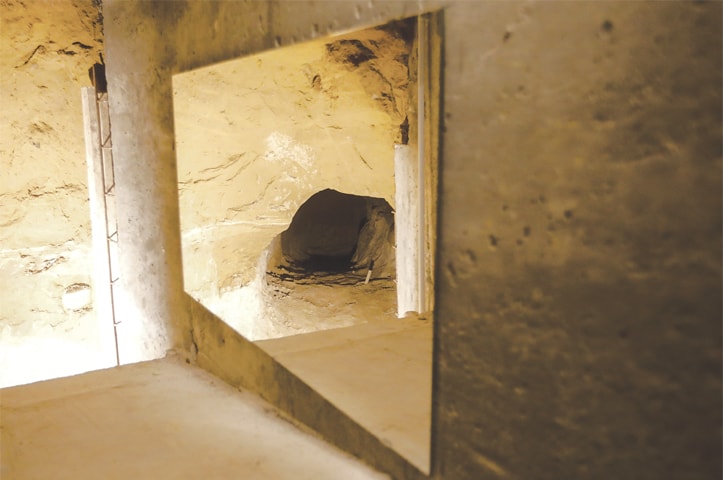
Bernauer Strasse was one of the most popular spots for tunnel diggers because of the high amount of clay in the soil seven tunnels were built underneath the wall. Not all tunnel projects were successful. Some collapsed before they could be used, while others were discovered by East Germany’s secret police, the Stasi. The newly opened tunnel can be reached through an access tunnel. Through two windows, 24.6 feet under the ground, visitors can peek into the dimly lit tunnel but not get inside. Researchers estimate that 140 people died trying to cross the Wall by flying over it, escaping through the sewerage system or jumping from buildings adjacent to the border. It is not clear how many people died trying to escape specifically through the tunnels.
Published in Dawn, November 8th, 2019