Lebanese PM Hariri resigns as crisis turns violent


 10
10


Lebanese Prime Minister Saad al-Hariri said he would submit his resignation on Tuesday, declaring he had hit a “dead end” in trying to resolve a crisis unleashed by huge protests against Lebanon's ruling elite.
The Lebanese premier addressed the nation in a televised address after a mob loyal to Hezbollah and Amal groups attacked and destroyed a protest camp set up by anti-government demonstrators in Beirut.
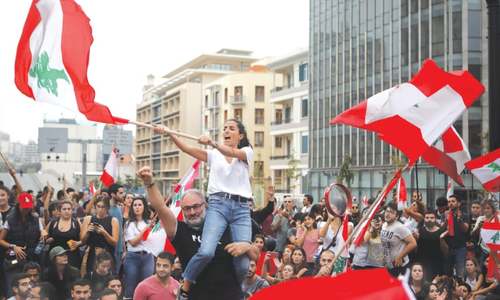
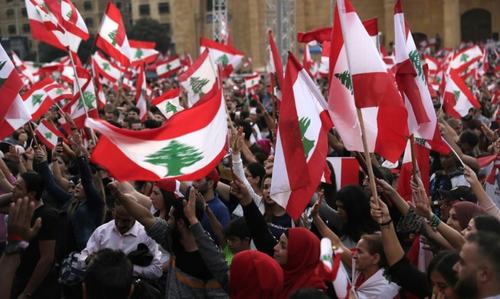
Lebanon has been paralysed by the unprecedented wave of protests against the rampant corruption of the political class that has collectively led Lebanon into the worst economic crisis since the 1975-90 civil war.
“For 13 days the Lebanese people have waited for a decision for a political solution that stops the deterioration (of the economy). And I have tried, during this period, to find a way out, through which to listen to the voice of the people,” Hariri said in his speech.
“It is time for us to have a big shock to face the crisis. I am going to the Baabda (presidential) palace to present the resignation of the government. To all partners in political life, our responsibility today is how we protect Lebanon and revive its economy.”
In central Beirut, black-clad men wielding sticks and pipes wrecked the protest camp that has been the focal point of countrywide rallies against the long entrenched elite.
The turmoil has worsened Lebanon's acute economic crisis, with financial strains leading to a scarcity of hard currency and a weakening of the pegged Lebanese pound. Lebanese government bonds tumbled on the turmoil.
The show of force in Beirut came after Hezbollah leader Sayyed Hassan Nasrallah said last week roads closed by protesters should be reopened and suggested the demonstrators were financed by its foreign enemies and implementing their agenda.
It is the most serious strife on the streets of Beirut since 2008, when Hezbollah fighters seized control of the capital in a brief eruption of armed conflict with Lebanese adversaries loyal to Hariri.
Protest camp torched
Smoke rose as some of the protester tents were set ablaze by Hezbollah and Amal supporters, who earlier fanned out in the downtown area of the capital cursing anti-government demonstrators.
“With our blood and lives we offer ourselves as a sacrifice for you Nabih,” they chanted in reference to Parliament Speaker Nabih Berri, head of the Amal Movement. “We heed your call, we heed your call, Nasrallah,” they chanted.
Security forces did not initially intervene to stop the assault, in which protesters were hit with sticks and were seen appealing for help as they ran, witnesses said. Tear gas was eventually fired to disperse the crowds.
Lebanese pound under pressure
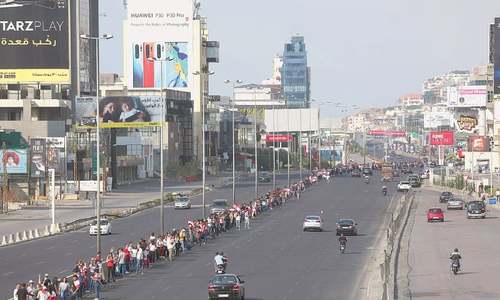
Nationwide protests since October 17 have paralysed Lebanon at a time of worsening financial crisis — banks were closed for a 10th day on Tuesday along with schools and businesses.
Hariri's resignation would defy the powerful Hezbollah. Nasrallah has twice said that he was against such a step, citing the risk of a dangerous void.
According to the constitution, Hariri's cabinet would stay on in a caretaker capacity until a new government is formed.
Hariri last week sought to defuse popular discontent through a batch of reform measures agreed with other groups in his coalition government, including Hezbollah, to — among other things — tackle corruption and long-delayed economic reforms.
But with no immediate steps towards enacting these steps, they did not placate the demonstrators, whose demands include the resignation of his coalition government.
A senior official from outside Hariri's Future Party had told Reuters earlier on Tuesday the premier would “most probably” announce a government resignation on Tuesday. The report weighed on Lebanese dollar bonds.
Central bank governor Riad Salameh called on Monday for a solution to the crisis in just days to restore confidence and avoid a future economic meltdown.
A black market for United States dollars has emerged in the last month or so. Three foreign currency dealers said a dollar cost 1,800 pounds on Tuesday, weakening from levels of 1,700 and 1,740 cited on Monday.
The official pegged rate is 1,507.5 pounds to the dollar. Salameh told Reuters on Monday the central bank would maintain the pegged rate when banks reopen.
“Even if the protesters leave the streets the real problem facing them is what they are going to do with the devaluation of the pound,” said Toufic Gaspard, an economist who has worked as an adviser to the IMF and to the Lebanese finance minister.
“A very large majority of the Lebanese income is in the Lebanese pound, their savings are in the Lebanese pound and their pension is in Lebanese, and it is certain it has already started to devalue,” he said.