US welcomes proposed intra-Afghan talks in China


The United States on Monday welcomed China's proposal to host a fresh meeting bringing together Afghan officials and the Taliban, after President Donald Trump abruptly ended talks with the insurgents.
Read: Afghan rivals to meet in China after US talks stall
The Taliban last week said that China invited a delegation to talks in Beijing, the second such meeting after a dialogue in Qatar in July that was co-arranged with Germany.
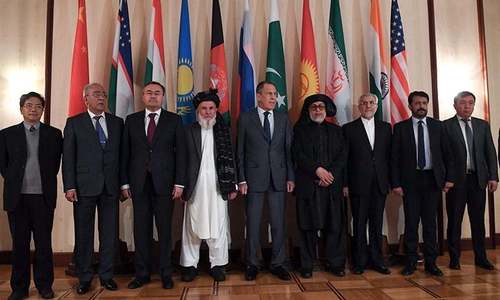
Zalmay Khalilzad, the US special envoy on Afghan peace, met with his colleagues from China, Russia and Pakistan last week in Moscow, where the four countries renewed support for a "comprehensive and sustainable peace agreement".
Read: Four countries call for reducing violence in Afghanistan
The four countries "welcomed the Chinese proposal to host the next intra-Afghan meeting in Beijing," said a joint statement released on Monday by the United States.
The talks will include "a wide range of political figures" including "representatives of the government of the Islamic Republic of Afghanistan, other Afghan leaders and the Taliban," it said.
There was however some confusion about when the talks might take place.
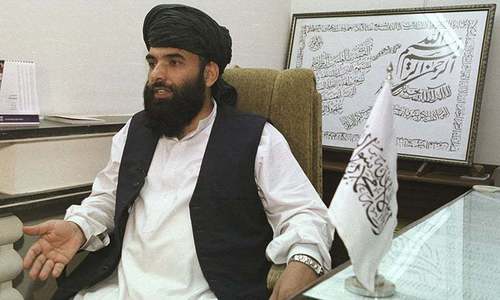
The Taliban last week said the conference would happen October 29-30, but on Monday an insurgent spokesman denied a report that said a Taliban delegation was in Beijing.
The Taliban have refused to negotiate formally with the Kabul government, but the Beijing and Doha gatherings are seen as fostering dialogue and planting the seeds of an eventual brokered solution.
Khalilzad negotiated for a year with the Taliban, reaching an agreement under which the United States would withdraw troops and end its longest war.
But Trump last month ended the talks, withdrawing an invitation he said he extended to the Taliban to meet near Washington, citing the killing of a US soldier.
The United States has frequently tried to blunt the global influence of China and Russia, but Khalilzad has frequently consulted with the two on his search for Afghan peace.
China shares a 76-kilometre (45-mile) border with Afghanistan and has voiced concern about a spread of extremism, while the Soviet Union in the 1980s led a disastrous intervention in the country against guerrillas then backed by Washington. For the second time, the three powers opted to include Pakistan.