Cabinet approves plan to form ‘media courts’

ISLAMABAD: The government on Tuesday approved a plan to form ‘‘media courts’’ for the first time in the country, apparently to seek speedy disposal of media-related cases within a particular time limit of 90 days.
The plan was approved by the federal cabinet at a meeting chaired by Prime Minister Imran Khan at the PM Office.
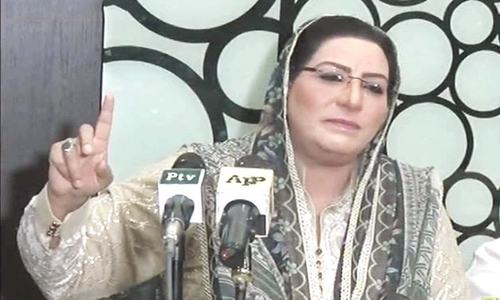
Briefing the media about the cabinet meeting, Special Assistant to the PM on Information Dr Firdous Ashiq Awan said what she called ‘‘media tribunals’’ would be formed after passage of a bill by the parliament while conceding that the government had not taken all stakeholders — including media persons, owners of media houses and media bodies — into confidence on this move.
“The prime minister has ordered that a bill envisaging formation of media tribunals be tabled in the current session of the National Assembly for a healthy debate on the issue,” she said, adding that the government “would sit with the media organisations on the matter later”.
Dr Awan said that until now media-related cases were being dealt by the Pakistan Electronic Media Regulatory Authority (Pemra) and the Press Council of Pakistan, but now Pemra would refer such cases to media tribunals. “Not only new cases but all pending cases will be sent to the tribunals. Media tribunals will not only take up cases against media persons and media house owners, but also against the government,” she said.
“When Pemra takes up a case against any media organisation, it is thought that the case has been initiated at the behest of the government. Therefore, the government wants free and fair trial by the tribunals which will be regulated by superior courts,” the special assistant said.
She said many media-related cases were being tried for several years, but now the government wanted to expedite the process of accountability [of the media] and, therefore, media courts would be bound to dispose of cases within 90 days.
Reacting to this development, Pakistan Peoples Party (PPP) chairman Bilawal Bhutto-Zardari’s spokesman Senator Mustafa Nawaz Khokhar said his party and the entire opposition would oppose in and outside the parliament any move to form media courts. “The bill will die in the parliament as we [opposition] enjoy majority in the Senate,” he added.
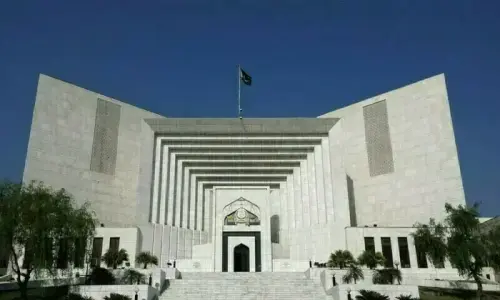
“Not only is the opposition raising voice for freedom of media, but Chief Justice Asif Saeed Khosa has also recently taken note of media reports regarding curbs on media,” Mr Khokhar said. “The PPP will certainly not support any move to gag media as it is against fundamental rights of expression.”
Responding to a question on media reports about the possibility of a deal between the government and the opposition, Dr Awan refuted such reports and said PM Imran Khan and the government firmly believed that those who had looted national wealth should be taken to task and plundered money should be recovered from them. “The prime minister is a custodian of national wealth and he has to recover looted public wealth. He will have no objection if plunderers strike a plea bargain deal with NAB and return looted public money,” she added.
Talking about the Kashmir issue, she said the prime minister would address the United Nations General Assembly on Sept 27 and plead the case of the Kashmiris before the world. Demonstrations would be held in Pakistan on the day Indian premier Narendra Modi would address the forum.
She said JUI-F chief Maulana Fazlur Rehman had headed the parliamentary committee on Kashmir for over a decade but did nothing for the Kashmiris. Dr Awan said the prime minister had called a meeting, to be attended by the chief ministers of four provinces, to eradicate adulteration from the country.
The federal cabinet, while disposing of a 19-point agenda of the meeting, also decided to convert visit visa of Chinese nationals present in the country into work visa. “It is a one-time opportunity for the Chinese nationals,” Ms Awan said, adding that the prime minster had ordered opening all opportunities being created by the China-Pakistan Economic Corridor.
She said the prime minister also directed the authorities concerned to fill vacant posts in all government departments and stressed the need for improving the performance of government employees, which would be gauged periodically.
The cabinet also decided that no car dealer would get premium [own] on sale of new cars. “Car companies appoint their own dealers but the cabinet has decided to discourage this trend,’’ Dr Awan said.
The meeting was told that there was no “land bank” in the country and, therefore, the provinces had been asked to compile data of state land under illegal occupation and submit it in the next cabinet meeting.
The cabinet also took note of increasing cases of dengue fever in the country and urged the provincial governments to launch awareness and prevention campaigns to save people’s life from the fatal disease. The meeting was informed that over 15,000 dengue cases had been reported in the country.
Published in Dawn, September 18th, 2019