Kenya becomes third country to adopt malaria vaccine

NAIROBI: Kenya on Friday became the third country to start routinely innoculating infants against malaria, using the world’s first vaccine to combat a disease that kills 800 children globally every day.
The vaccine — lab name RTS,S — targets the deadliest and most common form of malaria parasite in Africa, where children under five account for two-thirds of all global deaths from the mosquito-born illness.
Kenya joins Malawi and Ghana, which commenced their own pilot programmes for the vaccine supported by the World Health Organisation (WHO) earlier this year.
The vaccine will be introduced in phases across malaria-endemic parts of western Kenya near Lake Victoria, starting with Homa Bay, the country’s health ministry said.
“It’s an exciting time for Kenya as we roll out this vaccine in parts of the country where the burden of malaria is the highest,” Health Minister Sicily Kariuki said in a statement.
RTS,S will be added to the national immunisation schedule in these areas, given alongside other routine shots for children under two.
The health ministry said 120,000 Kenyan children were expected to be vaccinated under the pilot programme.
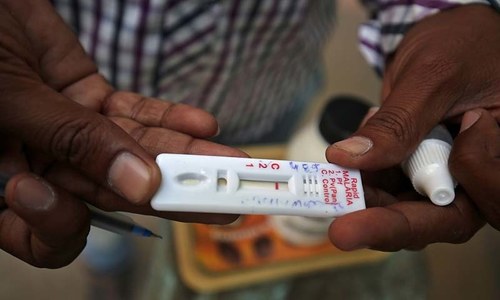
The country has distributed insecticide-treated mosquito nets, fumigated homes and improved diagnostics in its fight against malaria.
But the disease remains stubborn. The health ministry says malaria claimed more than 10,000 lives in 2016, and infected millions more. As in the rest of the world, children in Kenya bear the brunt of the disease.
Up to 27 percent of Kenyan children under five have been infected with the disease, the health ministry said.
“This vaccine represents an additional tool that will boost Kenya’s efforts in reducing malaria infections and deaths among children,” Kariuki said.
WHO says a child dies roughly every two minutes from malaria somewhere in the world.
Known under its commercial name as Mosquirix, the vaccine was developed over 30 years by British pharmaceutical giant GlaxoSmithKline in partnership with nonprofit PATH and African research institutes.
It is the only vaccine to date to show a protective effect against malaria in young children, WHO says.
It acts against Plasmodium falciparum, the deadliest malarial parasite and the most prevalent in Africa, where illness and death from the disease remain high despite some gains.
The shots, administered over four doses, have been shown in clinical trials to significantly reduce cases of malaria, and malaria-related complications, in young children.
The vaccine prevented about four in 10 cases of malaria and three in 10 cases of the most severe, life-threatening form of the disease, within the trial group, WHO says.
Evidence gained from the vaccine pilot schemes could guide decisions about whether RTS,S is rolled out more widely in future, WHO says.
Published in Dawn, September 14th, 2019