KASUR: Flawed economic policies of the Pakistan Tehreek-i-Insaf (PTI) government, recession, skyrocketing inflation and devaluation of rupee against the US dollar have started badly affecting the leather industry hides business in Kasur.
There is always a great demand for hides of sacrificial animals after Eidul Azha in Kasur, a hub of tanneries and leather industry, but it was not so this year, which witnessed a decline in demand for hides due to poor policies of the government while bad weather conditions also aggravated the situation.
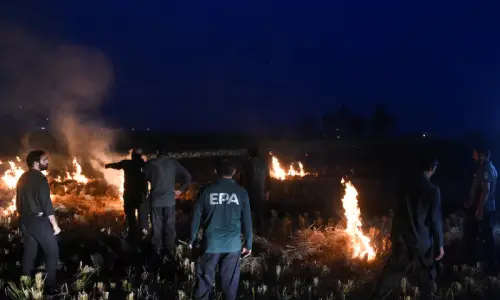
There are no buyers of the hides this year and the traders have started disposing them off by either throwing them off or burying them in the ground to save the cost of warehouses, Dawn had learnt.
Besides being a hub of leather industry, Kasur has textile industry too and both the industries are on the verge of destruction while hundreds of workers and daily wagers associated to these industries have already been rendered jobless.
Hides brought to Kasur from across the country are being disposed of by traders
According to the leather merchants, including Khalid Hussain, Muhammad Ashraf and Haq Nawaz, about five million hides of the sacrificial animals reach Kasur every year after Eidul Azha from Peshawar, Mardan, Kohat, DG Khan, DI Khan, Badin, Pishin from various parts of Punjab. They said the leather units in Kasur and other parts of the country are reluctant to purchase hides and preserve them as the cost of chemicals used to preserve and prepare leather has gone up manifold due to high rates of the US dollar. The cost of finished leather, resultantly, has risen also and affecting the production by the leather products manufacturers. They argue that the Pakistani leather has already lost its lustre in the international market due to high prices and it has less demand as compared to India, China and Bangladesh.
The skin of goat and sheep is being purchased at Rs40 to Rs80 while the hide of cow is being bought at Rs600 to Rs1200. Some five years back, the price of sheep or goat skin was Rs1,000 to Rs1,500 while the price of cow skin was up to Rs8,000. The fist process of salting the hides through labour cost them Rs200 per hide.
“Those who had collected hides during Eidul Azha have started wasting them as the cost of rent of warehouses is unbearable for them, especially when the price of finished leather is very low,” another leather merchant, Muhammad Rafiq, says.
The traders also blamed the muggy weather, which is unsuitable for the preservation of hides that required extra care in such a weather, resulting in higher cost.
The traders have demanded the PTI government to relax taxes on chemicals and export of leather, recently imposed general sales tax besides reining in the price of dollar. They say the leather industry is on the decline for the last several years for want of the attention of the rulers and policymakers but the recent imposition of the GST and rise in dollar might prove the last nail in its coffin if the remedial measures are not taken by the government.
Published in Dawn, August 29th, 2019