Rohingya Muslims in Bangladesh say they don’t want to return home


COX’S BAZAR: Few Muslim Rohingya refugees in Bangladesh have responded to plans for their repatriation to Myanmar, and all who did said they don’t want to go back, officials from the UN refugee agency and Bangladesh’s government said on Tuesday.
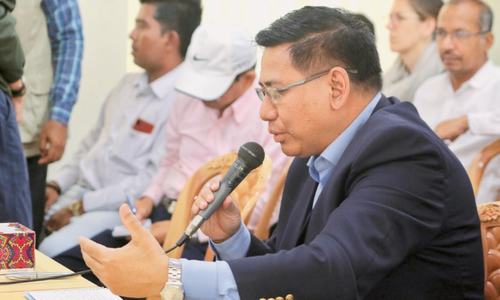
Bangladesh’s refugee commissioner, Abul Kalam, said only 21 families out of 1,056 selected for repatriation starting on Thursday were willing to be interviewed by officials about whether they wish to return. He said all the families said they would not go back. He said the mood in the sprawling camps in Cox’s Bazar where about one million Rohingya refugees are sheltered was calm and cordial.
“There has been no chaos like in the past. They have gone to the officials for the interviews and talked freely. This is very positive, they now understand the situation better,” he said.
“We have tomorrow, I am hopeful that many other families will face the interviews,” he said.
Louise Donovan, a spokeswoman for UNHCR, said in an email that a second interview would be conducted with refugees who agree to go back in “intention surveys” like the ones conducted on Tuesday.
Some Rohingya interviewed on Tuesday said they would not return unless Myanmar gives them citizenship. Myanmar has refused to recognise them as citizens, even though many of their families have lived there for generations, and insists on calling them Bengalis.
“We want a guarantee of citizenship first and they must call us Rohingya, then we can go,” said Ruhul Amin, head of a nine-member family. “We can’t go without our rights.”
Myanmar has verified that the selected families, comprised of 3,450 people, came to Bangladesh following attacks led by Myanmar’s military.
On Friday, a Myanmar cabinet minister said both Myanmar and Bangladesh had agreed to start the repatriation and had sought help from the UNHCR.
Last year, a similar attempt by the UNHCR and the two countries failed, with no refugees wanting to return voluntarily, a condition Bangladesh said it would follow under an agreement with Myanmar.
Myanmar’s military in August 2017 launched a harsh counterinsurgency campaign in response to an attack by a Rohingya insurgent group. The army operation led to an exodus of more than 700,000 Rohingya to Bangladesh and accusations that security forces committed mass rapes, killings and burned thousands of homes.
A UN-established Independent International Fact-Finding Mission on Myanmar last year recommended the prosecution of Myanmar’s top military commanders on charges of genocide, war crimes and crimes against humanity. Myanmar has rejected the report and any suggestion its forces did anything wrong.
Published in Dawn, August 21st, 2019