Desire to improve Pak-India ties behind Trump’s offer: US



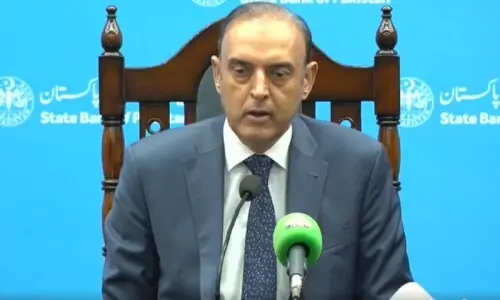
WASHINGTON: President Donald Trump’s offer to help resolve the Kashmir dispute should be seen against the backdrop of the US desire to help improve relations between India and Pakistan, says a senior State Department official.
Briefing the media on Prime Minister Imran Khan’s visit to Washington last week, the official reiterated the US offer to help India and Pakistan resolve the 70-year old dispute, if asked by both.
The official also stressed the need for Pakistan to fulfil its obligations to the Financial Action Task Force (FATF), which threatens to blacklist Islamabad if it does not eradicate terrorism financing. The official said the US ability to encourage a constructive dialogue between India and Pakistan, whether on Kashmir or other bilateral issues, would be a function of Pakistan taking sustained and irreversible steps against militants and terrorists on its territory.
“Obviously it’s in everyone’s interest to see an improvement in relations between India and Pakistan. And the [US] president’s offer was made in recognition of that fact,” the official said.
State Department stresses need for Islamabad to fulfil its obligations to FATF
“We recognise that Kashmir has been a bilateral issue but there are opportunities as Pakistan takes steps that build confidence in its own efforts to counter terrorism [and] ultimately towards a constructive dialogue. We stand ready to assist if asked by the parties to do so,” the senior State Department official added.
At a joint news conference with Prime Minister Khan at the White House on July 22, President Trump said he was willing to mediate between India and Pakistan to resolve the Kashmir issue if the two neighbours asked him to do so.
“If I can help, I would love to be a mediator. If I can do anything to help, let me know,” said Mr Trump while responding to a question from a Pakistani journalist.
“I was with Prime Minister (Narendra) Modi two weeks ago and we talked about this subject (Kashmir). And he, actually, said, would you like to be a mediator or arbitrator? I said, where? (Modi said) Kashmir,” Mr Trump explained.
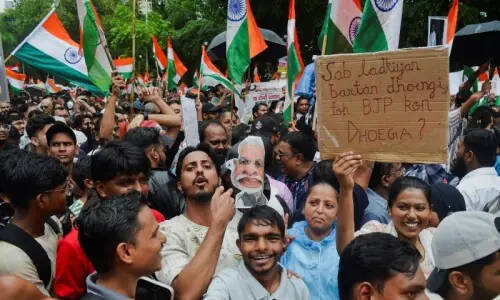
The statement caused a political storm in India where opposition parties called Mr Modi’s reported request to the US president an act of treason and asked him to explain why he made such a move.
The Indian government denied ever asking Mr Trump to mediate on Kashmir, adding that India retains its traditional position that it will not accept any third-party mediation on its disputes with Pakistan.
On July 24, President Trump’s Chief Economic Adviser Larry Kudlow rejected the suggestion that his boss had “made up” the claim that the Indian PM had asked him to mediate on Kashmir. “The president does not make anything up. That’s a very rude question in my opinion,” he told a reporter at a White House briefing.
At Wednesday’s State Department briefing, the senior US official backed Mr Trump’s offer but said a follow-up would depend on the steps that Pakistan now takes to eradicate terrorism from the region.
The visit, the official said, was a chance for the prime minister to discuss how his government would bring his vision about and for both sides to confer on how the United States could support Pakistan in this endeavour.
Pakistan was strictly following its “trade, not aid” policy, said the official, adding that no member of the prime minister’s delegation sought US financial assistance during the visit. The US was ready to help Pakistan achieve this and a US delegation may soon visit Islamabad for this purpose, the official added.
The official said Pakistan’s obligations to the Paris-based FATF had also been discussed at the prime minister’s meeting with President Trump and at a separate meeting with Secretary of State Mike Pompeo.
The US cooperation on this issue would depend on how Islamabad implements its own plan of action, the official added.
Published in Dawn, August 2nd, 2019