Iran links tanker row to ailing nuclear deal


VIENNA: Iran said on Sunday it considered Britain’s seizure of an Iranian oil tanker a breach of the ailing 2015 nuclear deal, after the remaining parties to the accord met in Vienna in another attempt to salvage the agreement.
British authorities detained an Iranian tanker off the UK overseas territory of Gibraltar in early July on allegations it was breaching EU sanctions on Syria.
A British-flagged tanker was then impounded by Iran’s Revolutionary Guards with its 23 crew aboard in the Strait of Hormuz on July 19, which was seen by the UK as a tit-for-tat move.
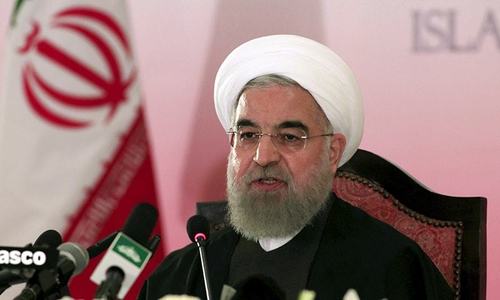
In comments to journalists after the meeting in Vienna, Iranian Deputy Foreign Minister Abbas Araghchi linked the tanker row to discussions over the nuclear deal, formally known as the Joint Comprehensive Plan of Action (JCPOA).
“Since Iran is entitled to export its oil according to the JCPOA, any impediment in the way of Iran’s export of oil is actually against the JCPOA,” Araghchi said.
He added that the issue of Iran’s oil exports — including US attempts to prevent them completely — was raised at the meeting.
“I think the atmosphere was constructive and the discussions were good, I cannot say that we resolved everything,” he said.
Envoys from Britain, France, Germany, China, Russia and Iran had gathered for talks in the Austrian capital, a month after a similar meeting failed to achieve a breakthrough.
The head of the Chinese delegation, Fu Cong, said Sunday’s talks had taken place in a “very good” and “professional” atmosphere but also admitted there had been some “tense moments” between the participants.
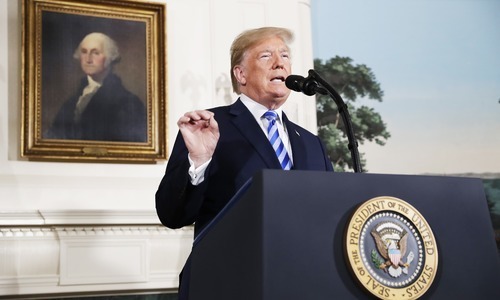
Tensions between Tehran and Washington have escalated since last year when US President Donald Trump pulled out of the accord that was aimed at curbing Iran’s nuclear programme, and imposed punishing sanctions.
Iran said in May it would disregard certain limits the JCPOA set on its nuclear programme and threatened to take further measures if remaining parties to the deal, especially European nations, did not help it circumvent US sanctions.
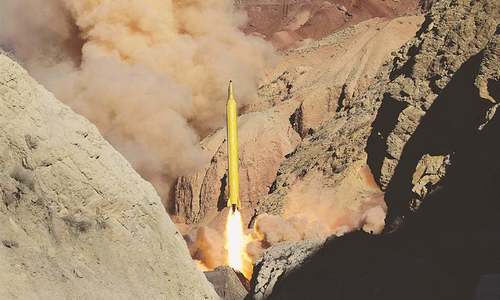
Even before the latest tanker seizures, pressure had been mounting in the region with a string of incidents involving tankers and drones. The US has said it brought down one and possibly two Iranian drones last week.
Iran shot down an unmanned US aircraft in June, after which Trump announced that he had called off retaliatory air strikes at the last minute because the resulting death toll would have been too high.
The US and Gulf powerhouse Saudi Arabia have accused Iran of being behind multiple mysterious attacks on tankers in the Gulf in June, which Iran denies.
Efforts by European powers, notably France’s President Emmanuel Macron, to salvage the nuclear deal have so far come to nothing.
Araghchi repeated after Sunday’s meeting that the remaining parties to the JCPOA wanted to meet “soon” at ministerial level but that no date had yet been fixed.
He said preparation for such a meeting was ongoing and that JCPOA partners were also convening “expert meetings on different areas to find practical solution for Iran to enjoy its benefits of sanctions lifting”.
He admitted that INSTEX, a mechanism set up by the JCPOA’s European partners to facilitate trade with Iran in the face of US sanctions, was “not functioning yet but it is in its final stages”.
Published in Dawn, July 29th, 2019