Need for flexible and alternative models of curriculum stressed


 0
0

KARACHI: With more than 22 million children out of school, Pakistan urgently requires efforts to design and implement flexible and alternative models of curriculum and education delivery to engage the hardest-to-reach children, particularly girls and overage dropouts in the marginalised communities.
This point was raised at a seminar held on Friday at the Aga Khan University-Institute for Educational Development (AKU-IED) to disseminate findings of a year-long study which examined efficacy of non-formal basic education (NFBE) curriculum and materials for quality teaching and learning processes.
The AKU-IED carried out the study in collaboration with the Japan International Cooperation Agency (Jica) in the 16 newly established NFBE centres set up by Jica and NGO World, a non-governmental organisation, in Korangi.
‘The need for non-formal education has arisen because the formal system has been unable to cope with the demand of basic literacy’
Under the research project, eight centres, for a comparison, were categorised as intervention centres which followed specially designed accelerated primary school curriculum for NFBE, textbooks and guide and their teachers received professional development support whereas eight others were categorised as non-intervention centres.
The latter followed the mainstream primary curriculum and textbooks published by the Sindh Textbook Board.
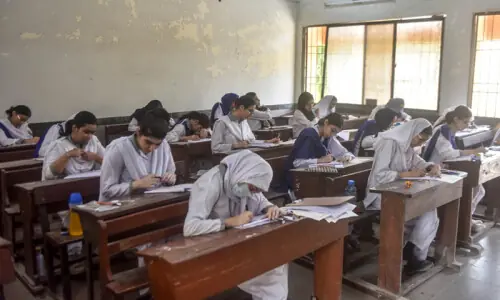
All the 16 centres catered for 7-16 years-old out-of-school children [both boys and girls], who either had never been to school or had dropped out early from school.
The baseline assessment results of 460 learners’ basic literacy and numeracy skills revealed an overall average score of 30.4 per cent.
Similarly, average scores of learners in the intervention centres and non-intervention centres were 34.3pc and 26pc respectively.
Learners with prior experience of education up to classes two, three and four from formal schools secured 70-90pc marks.
The baseline assessment was followed by an intervention period which required both the groups to implement their respective curricula in their eight focused centres.
The comparative analysis of both groups revealed that all the learners had improved their overall scores, especially the intervention centres’ learners. They performed better in subject-wise scores for mathematics, Urdu and English and the scale of this difference was found statistically significant.
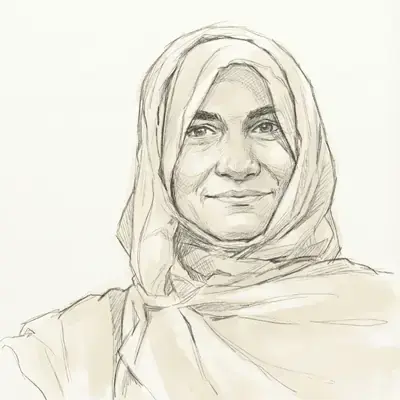
“The need for non-formal education in Pakistan has arisen because the formal system has been unable to cope with the growing demand of basic literacy education in the country,” said project lead, AKU-IED Dr Dilshad Ashraf, while giving a presentation on the study’s findings.
The study’s findings provide evidence to the usefulness of NFBE curriculum, textbooks and teacher guide in helping teachers to create an enabling environment for better learning outcomes, she added.
The idea of non-formal education, she pointed out, was not new and several such programmes were launched in the country over the decades. Unfortunately, however, these programmes couldn’t be sustained and institutionalised.
She also appreciated the directorate of literacy and non-formal education which approved the NFBE curriculum in 2016 and said that it’s a flexible curriculum and supported teachers to provide learning environment that satisfies intellectual demands of learners.
Giving recommendations, she called for extensive and consistent use of NFBE curriculum and curriculum materials, tailor-made professional development of teachers, community-led NFBE provision and active partnership between researchers and development practitioners for generating evidence for effective implementation of NFBE curriculum.
Earlier, chief adviser Jica-Advancing Quality Alternative Learning Chiho Ohashi, presented an overview of the project.
The speeches were followed by a panel discussion which was participated by Ghulam Asghar Memon, the director general, directorate of curriculum, assessment and research, school education and literacy, Fouzia Khan, head of curriculum wing, school education and literacy and senior educationist Sadiqa Salahuddin, among others.
Published in Dawn, June 29th, 2019