Sindh budget 2019-20: Sindh plans Rs285bn development spending

KARACHI: The Sindh government allocated Rs284.5 billion for provincial Annual Development Plan (ADP) for next fiscal (2019-20) against Rs343.9bn budget estimates and Rs172.9bn revised estimates for the current fiscal year.
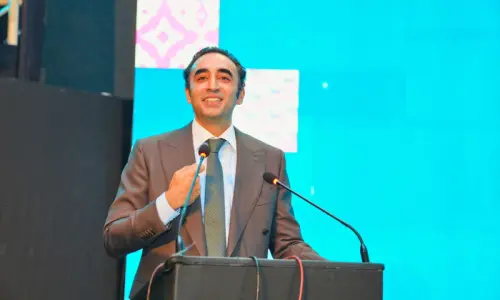
The budget 2019-20 was presented in the provincial assembly on Friday by Chief Minister Sindh Murad Ali Shah.
The actual size of the provincial ADP for next fiscal is Rs208bn and after adding Rs51.2bn in foreign project assistance (FPA), federal grants of Rs41bn and district ADP of Rs20bn, the totally outlay comes to round Rs284.5bn.
Shah, who also holds the provincial finance minister portfolio, complained about reducing the development expenditure to Rs172.9bn from budget estimates of Rs343.9bn owing to lesser transfers from the federal government.
Consequently, many development schemes could not be taken up while others have been delayed due to non-availability of funds, Shah lamented.
The chief minister said the province has been subjected to injustice in the federal government Public Sector Development Program (PSDP). The overall size of federal PSDP is Rs951bn with Rs127bn of FPA.
However, out the total federal government PSDP Sindh, there are some 50 ongoing and new schemes with an allocation of Rs33.7bn. Further, total schemes included in the federal PSDP 2019-20, which are by the government of Sindh are 12 having an allocation of Rs4.89bn as compared to Rs15bn in 2018-19 and Rs27.3bn in 2017-18.
Mr Shah said that in terms of the Karachi portfolio, Prime Minister Imran Khan had announced a package of Rs162bn for Karachi on March 30, 2019. There are only 19 Karachi-based schemes with a total allocation of Rs12.1bn. The new schemes for Karachi are only six with an allocation of Rs3.9bn.
At the outset there was fiscal squeeze due to low transfers from the federal government, he said, therefore, the provincial finance department was able to release only Rs130bn till June 3, 2019 against provincial and district ADP.
Allocation for energy sector has been increased in non-development budget from Rs23.883 in year 2018-19bn to Rs24.920bn in next fiscal year 2019-20. Allocation for irrigation sector has been increased in non-development budget from Rs22.744bn in year 2018-19 to Rs23.070bn in next financial year 2019-20.
The provincial government has allocated Rs12.3bn for Social Protection and Poverty Reduction Programme in the development budget 2019-20. Under this, there will be focus on three major interventions, Peoples Poverty Reduction Programme (PPRP), Poverty Reduction Strategy (PRS) and Social Protection.
Published in Dawn, June 15th, 2019