Five more suspects added to fourth schedule of ATA
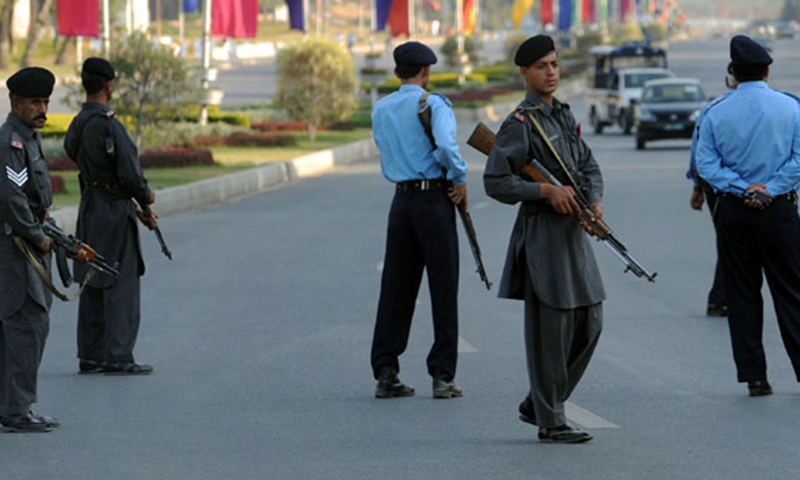
RAWALPINDI: Five more people have been placed on the fourth schedule of Anti-Terrorism Act 1997 taking the total number of those on the watch list in the district to 38.
The new additions to the list are: Noman Baseer alias Mana, a resident of Murree, and an activist of the outlawed Islamic State (IS) group, Mohammad Karamat, of Chak Belli, an activist of proscribed SSP/Ahl-i-Sunnat Wal Jamaat (ASWJ), Niamat Ali, a resident of Chak Belli, Mohammad Usman and Niamat Ali.
The police have been directed to obtain undertakings from the suspects for their good behaviour with a surety bond of not less than Rs500,000 each.
Suspects told to hand over their passports and submit surety bond to area police
All the five individuals have also been directed to submit their passports to the police station of the area concerned.
At least 31 of those already put under the watch list were members of proscribed organisations.
According to sources, the police had been directed to obtain surety bonds from all the fourth schedulers. However, two of the individuals earlier placed on the watch list have settled abroad. One of the fourth schedulers, Tabarak Abbasi, who lives in Saudi Arabia, has also been declared a proclaimed offender in a case registered with Murree police in March 2017.
Another suspect, who belonged to the outlawed Sipah-i-Sahaba Pakistan (SSP), has been absent from his residence. According to his family, he has been living in Dubai since 2015.
Nadeem Yousuf, a member of the outlawed SSP and a resident of Cantt area, who was also in the watch list, reportedly left the country without intimating the concerned police which led to registration of a case against him.
Police said during surveillance of the fourth schedulers, it emerged that the individual had been absent from his permanent residence. His brother informed the police that Mr Yousuf had left for Russia via Dubai.
Under the Anti-Terrorism Act, any individual whose name is placed on the fourth schedule is bound to inform the police before leaving their permanent residence and upon return.
In addition, they are also bound to submit a surety bond to the police station concerned guaranteeing their peaceful conduct.
A senior police official said it was not necessary to place all members of banned organisations on the fourth schedule as the decision was taken on a case-to-case basis.
About the individuals placed on the fourth schedule who left the country, a senior security official said they might have obtained permission from the authorities concerned.
At present, he added, no one on the watch list could leave the country as CNICs of such individuals are blocked.
The information about cancellation of any document is communicated to Nadra as well as the police concerned for record purposes and confiscation of the arms, if required.
Under the ATA, the police or any other government agency has powers to check and probe the assets of fourth schedulers or their immediate family members, including parents, wives and children.
According to sources, the Special Branch had been intimating the district police to get fresh surety bonds from all such individuals placed on the watch list.
Another senior police officer told Dawn that there was no standard operating procedure (SOP) in place to put the name of any individual who had been arrested by the police under on the fourth schedule.
He said the divisional intelligence committee decided whether to place a suspect’s name on the fourth schedule depending on the nature of his case and the background of the suspect.
According to an amendment to ATA in 2002, the police have the powers to ask individuals placed on the fourth schedule to report their movement to the police and the police in return could tell them to stay away from public places and institutions such as colleges, schools, restaurants and government institutions.
Published in Dawn, June 15th, 2019