Uber enlists 'Qute' to take on India's choked, polluted roads

Published June 13, 2019
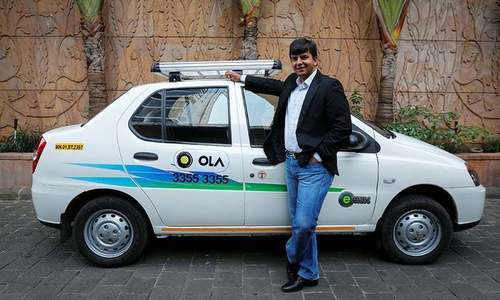
Uber will price the Qutes, which can carry up to three passengers and have windows and a fan but no air-conditioning, for slightly less than its standard car service. — AFP/File

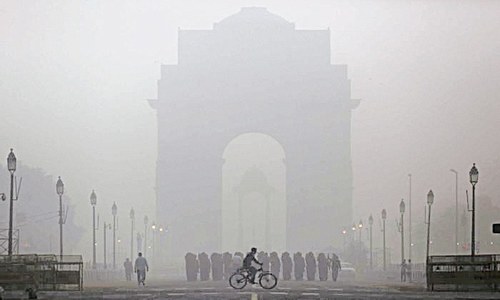
Uber Technologies Inc has launched a new ride-hailing service in India's tech capital Bengaluru that will use miniature gas-powered cars called “Qute” to win over commuters stressed out by the sprawling city's heavily-congested streets.

Uber's first market in India, Bengaluru has struggled to hold onto its nickname as the “Garden City” over the past two decades as its population tripled and infrastructure failed to keep up, stranding drivers in huge rush-hour traffic jams.

The chunky, low-powered vehicles, made by Bajaj Auto Ltd, are billed as a greener alternative to ordinary cars and India's ubiquitous three-wheel auto rickshaws, sometimes called tuk-tuks, which are cheap but give passengers hardly any protection from petrol fumes and monsoon rains.

Uber will price the Qutes, which can carry up to three passengers and have windows and a fan but no air-conditioning, for slightly less than its standard car service. It started with 50 of the cars on Thursday and will expand to several hundred in the coming months.

“We want to be seen as part of framing a solution,” said Satinder Bindra, Director, Communications India and South Asia, adding: “Bengaluru is one of our more important and larger markets.”

Follow Dawn Business on X, LinkedIn, Instagram and Facebook for insights on business, finance and tech from Pakistan and across the world.

Opinion

Editorial

After the budget
Updated 26 Jun, 2026

After the budget

Though not a bad document per se, the budget for FY27 is a familiar one, and familiarity in our economic history is rarely cause for comfort.
Missing the mark
26 Jun, 2026

Missing the mark

PAKISTAN’S commitment to the SDGs is routinely reaffirmed, but the gap between promises and progress continues to...
Up in smoke
26 Jun, 2026

Up in smoke

PAKISTAN is watching an epidemic unfold as the menace of narcotic abuse hits every fourth household in Karachi ...
Reflection time
Updated 25 Jun, 2026

Reflection time

Israel is the biggest source of instability in the Middle East, and it is high time the US ended its blind support to Tel Aviv, if it genuinely wants peace in the region.
Raised temperatures
25 Jun, 2026

Raised temperatures

THE fraught situation in Azad Jammu and Kashmir requires immense patience and cool heads. Temperatures are raised on...
Debatable remedy
25 Jun, 2026

Debatable remedy

THE Pakistan Psychiatric Society’s challenge to the Federal Shariat Court’s ruling on attempted suicide deserves...