Riyadh rallies allies against Tehran at Makkah summits


 2
2


MAKKAH: Gulf and Arab allies rallied around Saudi Arabia on Friday as it ratcheted up tensions with regional rival Iran after a series of attacks, drawing allegations from Tehran of “sowing division”.
Tehran, which has denied involvement in any of the attacks, expressed disappointment that Riyadh plans to level the same “baseless accusations” at a summit of the Organisation of Islamic Cooperation (OIC) early on Saturday.
King Salman called on Gulf and Arab leaders to confront Iran’s “criminal acts” after still unexplained sabotage attacks damaged four vessels, two of them Saudi oil tankers, in the Sea of Oman and twin Yemeni rebel drone attacks shut down a key Saudi oil pipeline.
His remarks came at the start of two back-to-back emergency summits in the holy city of Makkah that drew near-unanimous support for the Sunni kingdom from Gulf and Arab states — with the notable exception of Iraq.
Iran accuses Saudi Arabia of ‘sowing division’ in the region to Israel’s advantage
A joint statement issued by Arab leaders condemned “acts by the terrorist Houthi militias supported by Iran who [sent] aircraft that crossed into Saudi Arabia to two oil pumping stations and acts of sabotage that affected commercial ships in territorial waters of the United Arab Emirates”.
They said Iran’s behaviour “poses a direct and serious threat” and called on “the international community to take a firm stand to confront Iran and its destabilising acts in the region”.
Summit of Gulf leaders
A joint statement issued by Gulf leaders went further, echoing criticism of a landmark 2015 nuclear deal between major powers and Iran voiced by US President Donald Trump when he abandoned the agreement in May last year.
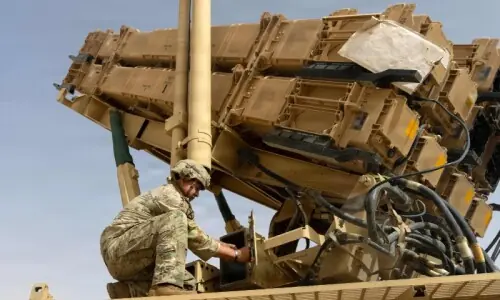
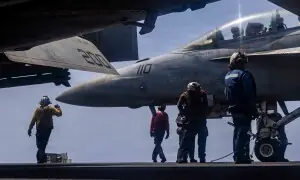
It expressed “support for the US strategy towards Iran” that has seen Washington tighten the screws on Iran’s economy with crippling unilateral sanctions and deploy an aircraft carrier task force, B-52 bombers and an amphibious assault ship to the Gulf, along with additional troops.
Gulf leaders called on Iran to “stay away from hostile, destabilising acts”.
They urged the international community to take “more serious and effective steps to prevent Iran from obtaining nuclear capabilities and to impose stricter restrictions on Iran’s ballistic missile programme”.
They also stressed “the importance of strengthening Gulf-US cooperation in the framework of a strategic partnership” that has been strongly promoted by the Trump administration.
The summits came after Trump’s hawkish National Security Adviser John Bolton said on Wednesday that Iranian naval mines were “almost certainly” responsible for the damage to the four ships off the United Arab Emirates on May 12.
The findings of a five-nation inquiry into what happened have yet to be released.
Saudi Arabia hosted the two summits of Gulf and Arab leaders in a bid to present a united front. But Iraq, caught in the middle of its two allies, the US and Iran, opposed the final statement released by Arab countries.
Despite the US administration’s assurances that it is purely defensive, Washington’s military build-up has raised concerns, even among allied governments, that brinksmanship with Tehran could lead to a dangerous miscalculation.
Iraq, which has warned repeatedly of the risks of war, has offered to mediate between Washington and Tehran.
Through the summits, Saudi Arabia has also sought to project a unified Arab front against Tehran in the face of a bitter rift with neighbouring Qatar.
Qatar was represented at Friday’s meetings by Prime Minister Sheikh Abdullah bin Nasser Al-Thani, Doha’s highest-ranking official to visit the kingdom since the start of a Saudi-led boycott in 2017.
Appearing tense, the Qatari official shook hands with the Saudi king but there was no indication of a thaw.
Saudi Arabia and its allies accuse Qatar of supporting Islamist movements and backing Iran — claims Doha rejects — and they have enforced bans on shipping, trade, direct flights, overflight and land crossings.
Iran’s stance
In response to the two summits, Tehran accused Riyadh of “sowing division” in the region to Israel’s advantage. Saudi Arabia “has continued to sow division between Islamic countries and in the region, which is the wish of the Zionist regime,” Iranian foreign ministry’s spokesman Seyed Abbas Mousavi said. “We see the attempts by Saudi Arabia to rally neighbouring and Arab countries against Iran as the continuation of futile attempts by America and the Zionist regime,” he added.
Published in Dawn, June 1st, 2019