Taliban kill 23 in two attacks on Afghan forces


 6
6


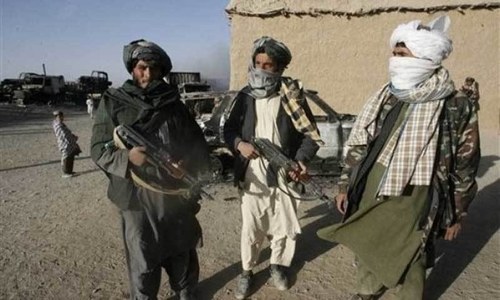
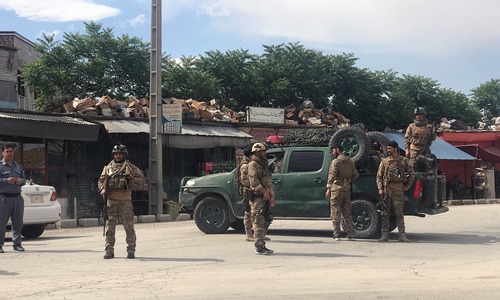
KABUL: Afghan officials said on Tuesday that two Taliban attacks targeted Afghan security checkpoints in the country’s west and east, killing at least 23 members of the security forces.
In western Ghor province, Abdul Hai Khateby, the governor’s spokesman, says 18 policemen and pro-government militiamen were killed and seven were wounded in hours-long gunbattle with insurgents near Feroz Koh, the provincial capital. No group immediately took responsibility for the attack.
In eastern Logar province, Mohammad Naser Ghairat, a provincial councilman, said insurgents overran an army checkpoint in the district of Baraki Barak on Monday, killing five soldiers there.
Ghairat said four soldiers were also wounded while the Taliban captured four others. He says the insurgents stole a Humvee and ammunition from the checkpoint. The Taliban claimed responsibility for the Logar attack.
Attacks against Afghan schools soar
The number of attacks on schools in Afghanistan nearly tripled last year, Unicef said on Tuesday, cutting children’s access to education amid worsening security in the war-torn nation.
Attacks on Afghan schools increased from 68 in 2017 to 192 in 2018, the first increase in such incidents since 2015.
Afghanistan’s ongoing war, now in its 18th year, resulted in more than 1,000 schools being closed by the end 2018, Unicef said, depriving some 500,000 children of their right to learning.
“Education is under fire in Afghanistan,” Unicef Executive Director Henrietta Fore said in a statement.
“The senseless attacks on schools; the killing, injury and abduction of teachers; and the threats against education are destroying the hopes and dreams of an entire generation of children.” Using schools as voter registration centres for parliamentary elections last year was one factor in the increase in attacks, Unicef said.
About 3.7 million school children between the ages of seven and 17 — accounting for almost half of all school-aged children in Afghanistan — do not attending school, according to the UN agency.
It blamed insecurity, poverty and discrimination against girls — who make up about 60 per cent of children not in education.
The Taliban opposed education for girls when they ruled Afghanistan from 1996 to 2001.
After the Islamist extremists were toppled in a US-led invasion, millions of girls began to receive an education.
But schools, students and teachers have been coming under increasing fire.
Last month, gunmen blew up a girls’ school in western Farah province. The incident followed the killing of a school teacher in northern Faryab province earlier this month.
Published in Dawn, May 29th, 2019