No negative impact of UN move against Masood Azhar, says envoy


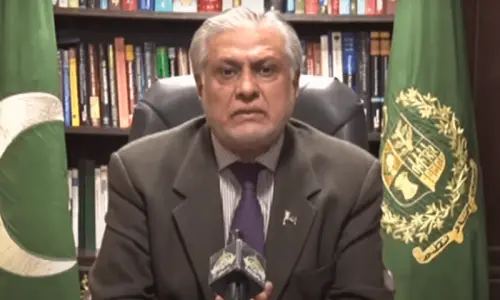
HOUSTON: There will be no negative repercussions of Masood Azhar’s designation as it only reinforces Pakistan’s commitment to fighting terrorism with the international community, says Ambassador Asad Majeed Khan.
The Pakistani ambassador, who is on a rare visit to Houston this week, noted that the United States also appreciated Pakistan’s commitment in its first reaction to the designation on Thursday.
The United States was the main sponsor of a proposal that a UN sanctions committee adopted on Wednesday by declaring Jaish-e-Mohammad chief Masood Azhar a global terrorist. The adoption happened only after China, which had vetoed the move on four previous occasions, withdrew its objection.
Before the adoption, China and Pakistan worked jointly to delink the designation from the Kashmiri struggle for freedom and the Feb 14 Pulwama terrorist attack. The delinking allows Pakistan to continue to support the Kashmiri freedom movement.
“I see no reason why this designation should have a negative impact on our relations with the United States or China,” said the ambassador while talking to the media after his address at the World Affairs Council in Houston on Thursday night. “It reinforces our commitment to fight terrorism.”
In his address to the council, the ambassador also spoke about improvements in US-Pakistan relations after a recent dip. “This is a very important and consequential relationship,” Mr Khan said. “We are keen to have a strong partnership.”
The ambassador also spoke about Pakistan’s role in promoting US-Taliban talks in Doha. Pakistan, he said, helped in the formation of a powerful Taliban delegation for the talks. “Without this, there could not be a significant progress in the talks.”
Ambassador Khan said that while Pakistan’s role was important, other regional actors must also play their parts.
Pakistan, he said, also supported US efforts for a broad-based intra-Afghan dialogue, which should include the Afghan government and the Taliban. Mr Khan hoped that progress in the Afghan peace process would improve Pakistan’s relations with the United States.
Underlining Pakistan’s efforts for better ties with India, the ambassador noted that in February the two countries fought the first dogfight between nuclear states. “This is very dangerous but unfortunately India seems more interested in whipping up differences for domestic political gains than in resolving disputes,” he said.
Published in Dawn, May 4th, 2019