Pompeo, Lavrov trade accusations on Venezuela in phone call


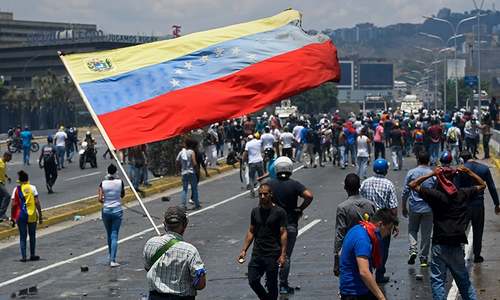
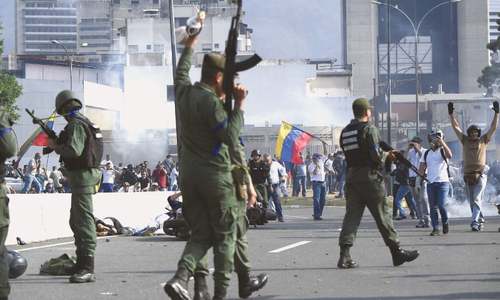
US Secretary of State Mike Pompeo and Russian Foreign Minister Sergei Lavrov traded accusations in a phone call on Wednesday that the other power was destabilizing Venezuela after an aborted military uprising.
With the United States pushing to topple President Nicolas Maduro, Pompeo charged that Russia and Cuba were instrumental in keeping the leftist firebrand in power.
Pompeo “stressed that the intervention by Russia and Cuba is destabilizing for Venezuela and for the US-Russia bilateral relationship,” State Department spokeswoman Morgan Ortagus said.
Pompeo “urged Russia to cease support for Nicolas Maduro and join other nations, including the overwhelming majority of countries in the Western Hemisphere, who seek a better future for the Venezuelan people,” she said in a statement.
But Lavrov denounced Washington's “destructive influence” in its support for opposition leader Juan Guaido, who on Tuesday claimed the backing of members of the armed forces in a short-lived attempt to wrest control from Maduro.
“Washington's interference in Venezuelan affairs is a flagrant violation of international law,” the Russian foreign ministry quoted Lavrov as saying in the call.
Lavrov took aim at President Donald Trump's assertions, made again Wednesday by Pompeo, that the United States is prepared to use force if necessary.
“The pursuit of these aggressive steps is fraught with consequences,” Lavrov said, adding that “only the Venezuelan people have the right to decide their destiny.”
The United States is among more than 50 countries, including most Latin American and European powers, that recognize Guaido as interim president.
Maduro was elected last year in an election widely criticized as fraudulent and has presided over a crumbling economy, with millions fleeing Venezuela faced with a shortage of basic goods.
Russia and China provide crucial diplomatic support, with Moscow also offering military technical assistance and Beijing providing vital credit as it buys Venezuela's oil.
The Trump administration has also warned Cuba, a longtime foe of the United States, to stop backing Maduro by allegedly deploying thousands of troops to back up Venezuelan security forces.