India hopes to avoid US sanctions over Russian missile deal


India is hopeful it will avoid US sanctions over its purchase of Russia's S-400 missile system, Defence Minister Nirmala Sitharaman told AFP.
New Delhi has been "heard and understood" by the US administration over its accord to buy the S-400 missile defence system for $5.2 billion, the minister said in an interview this week.
Read: India signs $3 bn submarine deal with Russia: reports
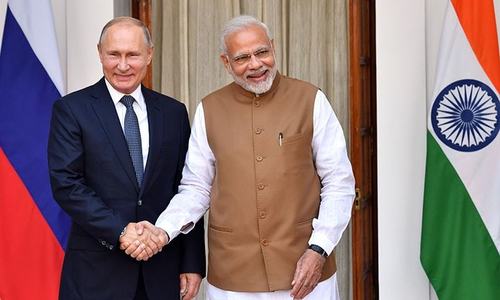
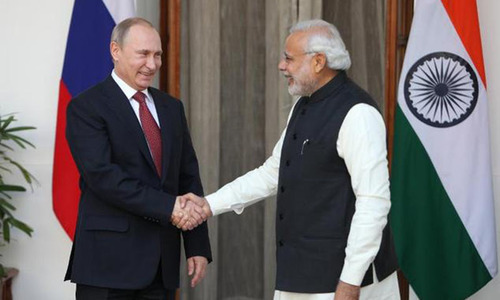
Indian Prime Minister Narendra Modi made the deal with Russian President Vladimir Putin in October, defying US warnings of sanctions on countries buying Russian military equipment. The sanctions were part of measures to punish Moscow for its actions in Ukraine in 2014.
President Donald Trump's administration imposed sanctions on China's military last year over Beijing's purchase of the S-400 and other military hardware.
It has also warned NATO member Turkey of sanctions for buying the S-400, and has suspended Turkey's participation in a US jet programme.
Sitharaman told AFP that Washington has taken on board that India, bordering both Pakistan and China, needed arms from Russia, and others, to remain a "strong partner".
Negotiations with Moscow, a longstanding supplier to India's military, on the S-400 began before the US sanctions were introduced, she said.
"In the case of S-400 we have explained ourselves well ... That has been heard and understood," Sitharaman said.
"They have appreciated the point of view put forward."
Asked if she was confident that India would avoid sanctions, Sitharaman said: "Yes I hope so."
Cold water
Before the deal was inked, Washington poured cold water on India's efforts to obtain a waiver from the US Countering America's Adversaries Through Sanctions Act (CAATSA).
Upgrades in arms systems "including the S-400 air and missile defence system" would be a particular focus for CAATSA, a US State Department spokesperson was quoted as saying by India's PTI news agency.
But Randall Schriver, Assistant Secretary of Defense for Indo-Pacific Security Affairs, told a hearing in March that Washington wanted to "work through" the problem, calling India "an important emerging strategic partner".
He added however that India's contract with Russia has not been completed and that the US was "very keen to see (India) make an alternative choice (to the S-400) and we are working with them to provide potential alternatives".
China
Washington is in a tricky position with India. It wants to bolster ties with the Asian giant to counter China's assertiveness, a trend which has also rattled New Delhi.
In 2017, India and China had a military standoff over a Himalayan plateau claimed by both Beijing and Bhutan, a close ally of India.
Since then China and India have sought to patch up relations, including at a meeting between Modi and President Xi Jinping at Wuhan, China in April 2018.
"Sometimes there are differences and you have a face-off," Sitharaman said.
"But our attempt, particularly after the prime minister's Wuhan meet with the Chinese president, our attempt has been that these differences ... cannot be allowed to become disputes."
But China has also made inroads in Sri Lanka and the Maldives — countries that India considers to be in its sphere of influence — through its One Belt, One Road Initiative (OBOR), also known as the Belt and Road Initiative (BRI).