LHC seeks written guarantee from Khadim Rizvi that he won't create unrest if released on bail

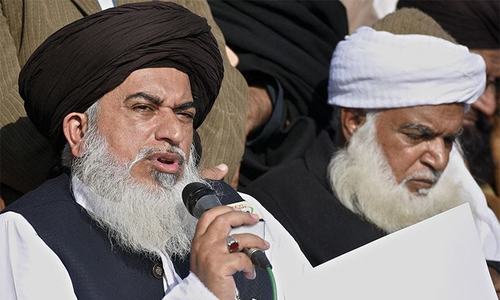
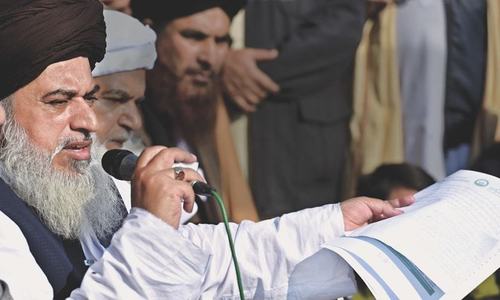
The Lahore High Court on Monday told Tehreek-i-Labbaik Pakistan (TLP) leader Khadim Hussain Rizvi to provide a written affidavit stating that he would not create unrest in the society if released on bail.
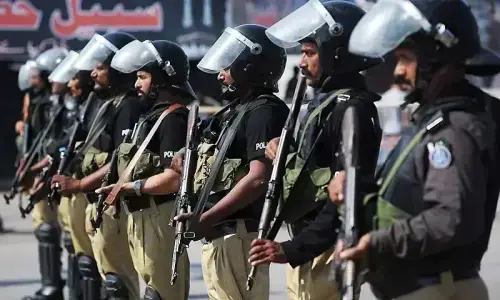
Rizvi was taken into "protective custody" by police in Lahore on November 23, 2018, after law enforcement agencies launched a massive crackdown against workers of TLP and Tehreek-i-Labbaik Ya Rasool Allah (TLYRA).
The crackdown came ahead of Rizvi's call to party members to observe martyrs’ day on November 25, the anniversary of the Faizabad sit-in. He had asked workers and supporters to gather at Faizabad in Islamabad — the same venue where the party had staged a weeks-long sit-in in November 2017 that had virtually paralysed the federal capital and led to several people losing their lives.
Rizvi's arrest also came weeks after the TLP led three-day protests across the country against the acquittal of Aasia Bibi — a Christian woman whose blasphemy conviction was overturned by the Supreme Court at the end of last month.
On Monday, a two-member LHC bench headed by Justice Muhammad Qasim Khan directed the lawyers for the TLP chief and the state to present their arguments regarding the bail application on April 11.
Lahore High Court Bar Association Chairman Hafizur Rahman was among the lawyers representing Rizvi in court today.
Rahman assured the court that Rizvi would not disrupt the law and order situation after his release on bail. "He is an innocent man sitting in jail," he said.
But the bench remained unconvinced, asking the lawyer what guarantee there was that Rizvi would not create unrest if granted bail.
The court subsequently ordered that a written guarantee from Rizvi be provided.
The Faizabad sit-in
In November 2017, TLP workers demanding the resignation of then law minister Zahid Hamid had staged a weeks-long sit-in at the Faizabad interchange that had disrupted daily life in the federal capital and led to several deaths.
On November 21 of the same month, the apex court had taken notice of the sit-in and directed the defence and interior secretaries to submit a detailed report on the matter.
Days later, the then PML-N government had launched against the protesters an operation which, when failed, had forced the authorities to cave and Hamid to resign.
The Supreme Court in February gave its verdict on the suo motu case over the Faizabad sit-in. The verdict directed the government, law enforcers, intelligence agencies and the army's media wing to operate within their mandate.