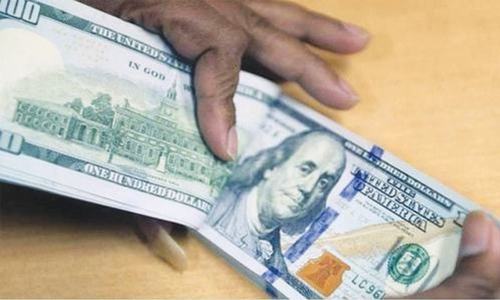
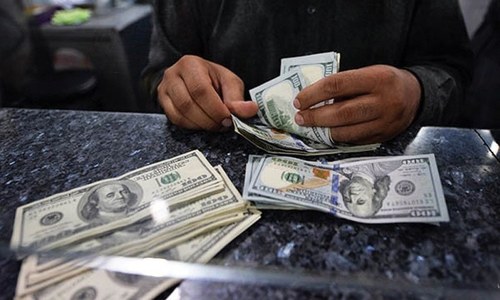
BY announcing that it intends to launch a “crackdown” against “hoarders and speculators” of foreign exchange, the government may well have made a bad situation worse.
There are two reasons why this is so. First is that the announcement signals desperation, because usually crackdowns of the sort they have in mind are the last resort in such situations, not the first.
And the second is because the whole effort appears to be poorly coordinated since the State Bank, which held a meeting with the heads of exchange companies on the same day that the announcement was made, did not even know that such a decision was under consideration.
The decision was made in Islamabad in a meeting chaired by the finance minister and attended by, among others, the interior secretary.
The FIA was given verbal instructions to proceed with a crackdown, but the investigation agency does not usually go ahead in such cases without guidance from the State Bank, because it is the latter that has all the information regarding foreign currency transactions on a daily basis.
Now having made the announcement, if the government fails to stabilise the exchange rate in the open market, the signal that the markets will receive is that the state has run out of options, and that devaluation has become inevitable.
The finance minister may well have a point when he emphasises that further devaluations are no longer necessary since the real effective exchange rate is now in equilibrium and the interbank market is stable. But having a point and communicating it effectively to the markets are two different things.
Since the open market is where all the volatility is, the problem is a combination of ingrained expectations of an impending devaluation among more retail clients and a genuine shortage in supply since the exchange company heads report that there are no sellers for the dollar these days, only buyers.
Clearly, sentiments are looking past the finance minister’s assurances to rising inflation and the downward trajectory that the rupee has been on in past months.
Dealing with such sentiments is a delicate task. Putting out the message that the exchange rate is stable is only part of the signalling that is required.
Preserving one’s own credibility is also important, and refraining from publicly speaking about any crisis, or the enormous pressures the economy is facing, is also critical. The finance minister put out a message himself, in his live webcasted chat with his social media team, that the economy faces unprecedented pressures. He has even used the word ‘bankruptcy’ in his public comments.
Such messaging creates perceptions that contradict his assertion that the exchange rate is stable; people will inevitably ask themselves how they should secure themselves against further erosion of their purchasing power.
The government now needs to project confidence and a sense that things are firmly under control in order to stabilise the situation.
Published in Dawn, April 8th, 2019