How the US media covered Pakistan-India tensions


 17
17
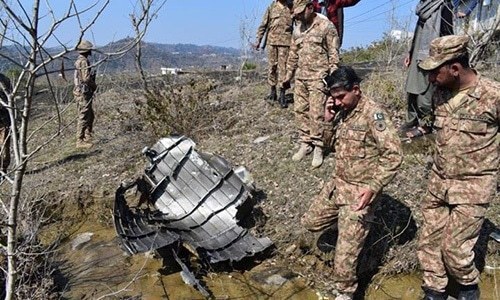

WASHINGTON: Hundreds of news stories and in-depth analyses have appeared in the American media since Feb 14, when a suicide bombing at Pulwama in India-held Kashmir triggered the latest India-Pakistan crisis. Nearly all highlighted the centrality of the Kashmir dispute in the India, Pakistan conflict.
The Washington Post said “the India-Pakistan relationship is facing the most serious escalation in decades".
“This is where a nuclear exchange is most likely. It’s not North Korea,” warned The New York Times. “Tensions have cooled between India and Pakistan ... but their nuclear arsenals mean unthinkable consequences are always possible.”
Take a look: Shun the TV, stop a war
However, none of them go as in-depth as historian Chitralekha Zutshi writing a commentary titled ‘Kashmir conflict is not just a border dispute between India and Pakistan’ for Channel News Asia (CNA) published on its website on Sunday.
“The desire for autonomy in different areas of Kashmir has led to repeated uprisings and independence movements,” she writes.
She notes that among the uprisings and movements happening in Kashmir now, “the most prominent is a violent insurgency against Indian rule in the Kashmir Valley that began in 1989 and has continued, in ebbs and flows, over the past three decades.” She points out that thousands have been killed in this conflict while the Kashmir Valley “has become a militarised zone, effectively occupied by Indian security forces”.
Referring to a United Nations report, she writes: “Indian soldiers have committed numerous human rights violations there, including firing on protesters and denying due process to people arrested.”
She warns that while tensions in Kashmir may have subsided, the root causes of violence there have not. “In my assessment, the Kashmir dispute cannot be resolved bilaterally by India and Pakistan alone — even if the two countries were willing to work together to resolve their differences,” she writes, advocating an open debate on the issue, which also recognises and debates the aspirations of the Kashmiri people.
Published in Dawn, March 11th, 2019