Over 2,000 schools in tribal districts without toilets, drinking water



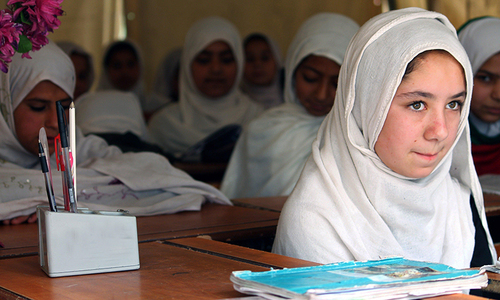
PESHAWAR: As many as 2,443 educational institutions of the seven merged tribal districts, mostly for girls, are without toilets and around 2,580 without drinking water supply as the Khyber Pakhtunkhwa government has focused its attention on the provision of solar energy to more than 300 mosques in the area.
Almost half of the 4,961 primary schools for boys and girls in the seven merged districts, including six Frontier Regions, don’t have basic facilities like drinking water, toilet, electricity and boundary walls, reveals the 2017-18 statistical report of government educational institutions.
According to the report compiled by the Education Management Information System (EMIS), Directorate of Education of the Newly Merged Tribal Districts, the middle, high and higher secondary schools for girls are also without toilets and drinking water facilities.
The report disclosed that the dropout rate among girls in the area was 79 per cent.
“One of the major reasons for high dropout rate among girls is unavailability of toilets in schools,” a senior official of the secretariat for merged districts told Dawn.
Minister says plan made to provide basic facilities to schools in erstwhile Fata
He wondered where schoolgirls go toanswerthe callofnature.
“In any society, conservative or liberal, rural or urban, the parents will not send their children to schools unless basic facilities like toilets are provided there,” he said, adding that majority of the schools in the merged districts did not have allied facilities.
The provincial cabinet recently ordered the solarisation of over 300 mosques in the region on a war footing to facilitate worshippers. Initially, the government had issued orders for the solarisation of 100 mosques in merged districts.
The ruling Pakistan Tehreek-i-Insaf during its previous tenure had chalked out a plan for solarisation of 4,000 mosques apart from announcing Rs10,000 honorarium for every prayer leader.
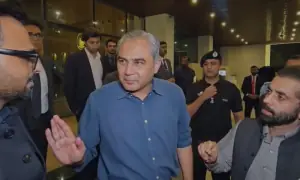
Minister for information Shaukat Ali Yousafzai justified the cabinet’s decision regarding solarisation of mosques in tribal districts saying the government has worked out a separate plan to provide basic facilities to educational institutions.
“In the past, mosques and seminaries were ignored which worked to intensify a sense of deprivation that resulted in religious extremism and militancy,” he argued, adding that the government should own mosques and seminaries.
An opposition lawmaker and officials at the helm of affairs opposed the government’s decision regarding mosque solarisation and termed it an attempt on part of the ruling PTI to influence results of the elections to the provincial assembly to be held in seven districts and six FRs this year.
Former senior minister and Muttahida Majlis-i-Amal MPA Inayatullah Khan said the PTI government was trying to use solarisation project as a tool to influence the upcoming elections in tribal districts.
“We are not against the provision of facilities to mosques, but this project is used ahead of election as a political leverage,” he said.
Mr Inayatullah said there was no harm in the solarisation of mosques but the government’s first priority should be the construction of toilets in schools, especially for girls.
He said the PTI had also launched Sehat Insaf cards in tribal district to manipulate polls. Elections in merged districts are likely to be held before June this year.
A senior official termed solarisation of mosques a cosmetic measure by the PTI government. He said computer labs had become redundant in schools due to unavailability of electricity, while the PTI was solarising mosques, where people spent 20 minutes to offer prayers.
Minister Shaukat Yousafzai said the project should not be associated with the poll campaign.
The EMIS study portrayed a dismal picture of the lack of basic and allied facilities in educational institutions.
According to the data, educational institutions in merged districts require around 600,000 desks, benches and chairs for students.
Also, 1,069 educational institutions don’t have boundary walls.
Under the five years plan (2015-20), the estimated cost of basic and allied facilities to educational institutions in seven districts is around Rs8 billion.
Officials said the directorate had sanctioned Rs10 million and Rs5 million for purchase of desks and chairs in every district and FR, respectively.
They said the furniture and other goods were destroyed or stolen when the militants held sway in the region.
Published in Dawn, February 10th, 2019