‘Karachi is the most unique South Asian city’


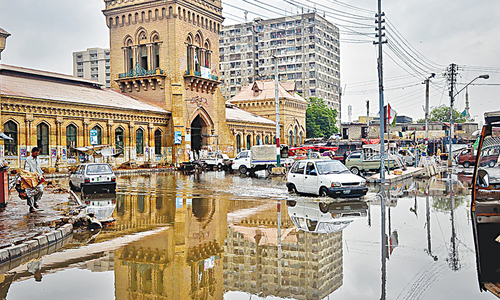
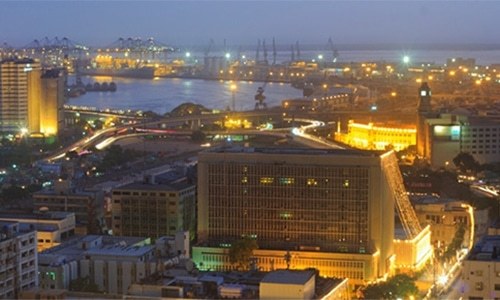
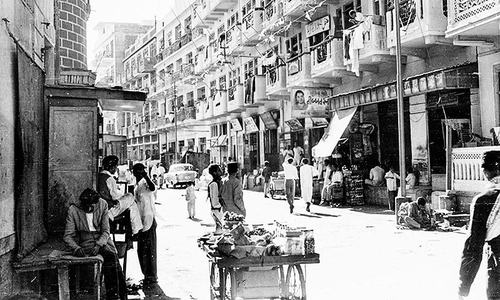
KARACHI: Lovers of history thoroughly enjoyed the session moderated by Kamran Asdar Ali on ‘Karachi of the 1950s and 1960s’ at the Adab Festival Pakistan on Saturday.
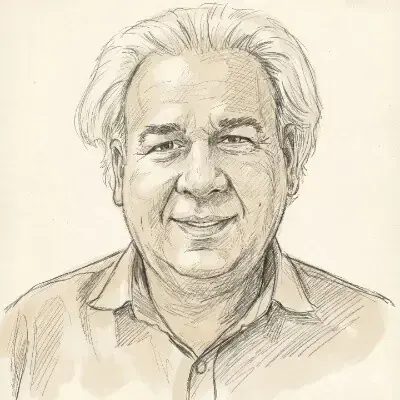
Journalist Ghazi Salahuddin went down memory lane in his distinct style. He said he was in school in the 1950s. Usually when we look back at our past, we see everything cosy and comfortable. But the Karachi that he remembers was actually a very spacious place. There was a sense of freedom. Life was so different that it’s difficult to relate to it now. Things were taking shape. New groups of people were coming from across the border.
Mr Salahuddin said now that he reflects on the Karachi of the ‘50s, he realises why the city is the ‘most’ unique city in South Asia. In order to know that, one needs to imagine a Lahore without Punjabis or a Kolkata without Bengalis. So, the Karachi that was developing in those days had tiny networks from North India transplanted to the city. At the time, the nostalgia was of the areas [across the border] from where people had come. There was very little interaction with Sindhis, Baloch or Punjabis here because they were not in a big number in Karachi.
Life in Karachi of yesteryear discussed
Mr Salahuddin said he did not go to a university. The places that he acquired education from were the British Council and the city cinemas. In the 1960s there were 100 cinema houses in Karachi.
Writer Dr Shershah Syed said in those days cinema halls used to have women-only shows on Fridays. He also narrated a story about the first film that he saw, Armaan, at Jubilee Cinema by bunking school.
Novelist Maniza Naqvi spoke about how she managed to stop the historic Pioneer Bookshop from closing down. She said one day in Washington she read a news item about the shop’s condition suggesting it was about to shut down. The picture that accompanied the item reminded her of the areas which featured in her novels. She could not help herself, flew down to Karachi, talked to the person who ran the shop and persuaded him not to close it down.
New trends in Urdu poetry
A post-lunch session on inventions in Urdu poetry –– Shaeri mein nayee ejaad –– moderated by Asif Farrukhi generated a lively discussion.
When asked about the changes that have recently occurred in her poetry, Azra Abbas said as one grows up from, let’s say, being a 30-year-old to 40-year-old, changes in one’s system and surroundings unfold. When she began writing poems as a young creative person, there were people (men) who criticised her for being vulgar. But there were also people who encouraged her as well, which enabled her to keep writing.
Afzal Ahmed Syed said he wasn’t born a poet, but wants to die as one. He considers writing poetry as a serious business. In his younger days he read individuals such as Ghalib, Iqbal and Tagore. Later, when he began writing himself, he realised that he would have to create his own world of poetry.
Mr Syed said coming across prose poems introduced him to a new realm and he thought it was a plausible way to express oneself. Then he understood that he had his own sets of experiences, because he had witnessed two civil wars.
Tanvir Anjum said it was during her university days that she came to know writers such as Ahmed Fawad and subsequently Sarwat Husain and Azra Abbas. She claimed that all her collections of poems have a different feel and flavour. Talking of change, she pointed out that whatever changes she experienced have carried on. And the kind of experiences that she had did not require her to write poems in a certain metre.
On the same subject, Ms Abbas said the change she has felt have been strong (gambhir). What happens is that she senses that and puts it into words, after which the reader gets a hang of that change by reading her poems.
Once all three speakers concluded their initial comments, Mr Farrukhi asked them to recite their poems.
Published in Dawn, February 3rd, 2019