Asad rejects request to abolish super tax on banking industry


LAHORE: Finance Minister Asad Umar has rejected the Pakistan Banks Association (PBA) request to either abolish super tax or restore the cascading relief announced earlier as provided for the banking sector.
The banking sector had requested the finance minister to either remove the four per cent super tax on the banking sector or restore the cascading relief for the period 2019-21 as announced by the previous government.
The government, in 2015, imposed super tax on banking and non-banking entities with annual income greater than Rs500 million for the rehabilitation of internally displaced persons in the tribal areas of Khyber Pakhtunkhwa.
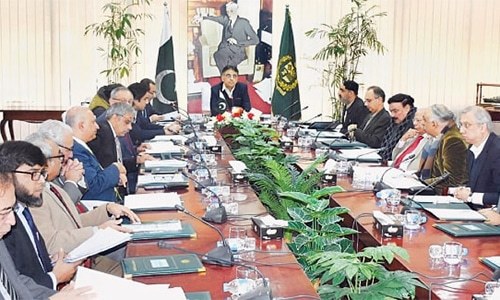
Sources in the industry told Dawn on Wednesday that finance minister, during a meeting with the PBA President Mohammad Aurangzeb, acknowledged that the government had done away with the cascading relief and reinstated the super tax at the previous rate of 4pc for the period 2019-21 in the supplementary budget tabled in the National Assembly last week.
The minister, however, told the PBA chief that “alternative relief measures — lower tax for incremental lending for agriculture and small and medium enterprises and low-cost housing, as well as abolition of cash withdrawal tax on tax filers — would help the banks maintain healthy balance sheets going forward,” according to sources.
“A profitable banking industry will be the key in the overall economic recovery over the next three years,” he was quoted to have told Mr Aurangzeb. Moreover, the minister also assured Mr Aurangzeb to look into the PBA’s request to reverse the decision withdrawing exemption on payment of super tax for tax year 2018.
The banks pleaded with the minister that their books for the tax year 2018 had been closed on Dec 31, 2017 with taxes on their earnings during that year paid and returns filed and “they could not go back and provide in 2018 (tax year 2019)”.
If not revoked, the decision will mandate banks to pay 8pc super tax on their 2018 earnings. It may also be recalled that the banks had already paid super tax for year 2019 in advance before June 30, 2018 during the previous government’s tenure.
Analysts say the payment of 8pc super tax will adversely hit the profits for the year 2018 of the banks as they would be paying 43pc tax — including 35pc corporate tax.
Moreover, banks were exempted from the payment of this tax on their 2017 earnings and were provided cascading relief in the original budget for the present fiscal year which was presented by the previous government.
However, the PTI government, in its mini-budget announced on Jan 22, removed the super tax on non-banking companies to facilitate their expansion and growth plans.
Published in Dawn, January 31st, 2019