Region’s first school for visually-impaired children still going strong in Rawalpindi



With humble beginnings as a makeshift school for a few children in Rawalpindi, the Government Qandeel Secondary School has been operating in the largest temple in the downtown area for 61 years.
The school was the first institution for visually-impaired children in the region. It received a permanent location in 1958 at the Mandir Kalyan Das in Kohati Bazaar, where it still runs today on land adjacent to the main temple building.
When it opened, the school was run by Saeeda Habib Farooqi, but it was nationalised in 1972 and brought under the ambit of the Punjab education department.
Mandir Kalyan Das is one of the largest temples in the garrison city. It was built in 1880 by a wealthy Rawalpindi resident, Kalyan Das, from the Suri family. The building of the temple came under the government’s administrative control following partition, when it was handed over to the Evacuee Trust Property Board.
The board in turn permitted schools to operate in places of worship to maintain the dignity of these buildings, and made it mandatory that schools would not change the structure of these sites.

Since separate schools for visually-impaired girls and boys have opened in the seven tehsils of Rawalpindi district, the number of students at Qandeel Secondary School has fallen; there are 75 children enrolled at the school today.
However, the school has taught more than 3,000 visually-impaired children since its inception, who have gone on to work in education, law, the civil service and other fields.

When the school was still a primary institution its building consisted of six classrooms. Since being upgraded to a high school, more blocks have been added to the building to meet its additional requirements. This includes a new hall and more classrooms that were added when the school was equipped with computers.
Students are given Braille books as well as computer and music lessons.
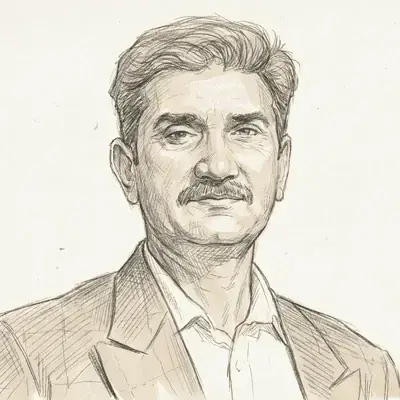
“We are struggling for the betterment of the visually challenged so they can do anything without the help of others and become useful citizens of society,” said Noor Hussain, the school’s principal.
Mr Hussain, who is himself visually impaired, added that “there is no need for special colleges for the blind” as they must have the opportunity to mix with others as well. However, he said, separate schools are necessary so children can learn how to read and write, before going to regular colleges after matriculation.

He said the school also has a hostel for the students, and the government has provided better facilities for the students with the available resources. However, more funding needs to be allocated to improve services, he said.
“Computers and mobile phones make the lives of blind people easy. They can explore the world through these gadgets. Special apps are downloaded for the blind on mobiles and computers and they can handle them easily,” Mr Hussain said.

Naveed Usmani, a former student who completed a masters in history from Quaid-i-Azam University before returning to Qandeel Secondary as a teacher, said: “I lost my eyesight after a road accident. I learned how to read and write in school. After getting a masters degree, I decided to help children who are visually challenged,” he said.
Published in Dawn, January 20th, 2019