94
94
HOW do we make sense of the prime minister’s decision to order the firing of the managing directors of the two gas distribution companies? On the face of it, assigning blame to the MDs of the gas distribution companies appears odd, given that they are not responsible for the production of gas or for its import.
Besides, they neither draw up the merit order list nor do they decide how the pace of the expansion of gas demand is to be regulated. Their role is simply to run the gas distribution system.
If there is a shortage of gas in the system, or if there is a technical outage at some point that is going to constrict the supply of gas, this information is available to authorities in the federal government in real time.
At least four officials in Islamabad, with offices very close to each other — the secretaries for power and petroleum as well as the ministers of these respective divisions — have in their offices screens displaying real-time data on how much gas is in the system, how the fields are functioning, how the distribution system is operating, and so on.
With all this readily available information, it is difficult to comprehend how blame was assigned to the very last link in the gas supply chain: the heads of the two distribution companies.
Ever since the country’s gas shortages began to bite with the onset of winter, the government ordered an inquiry first by the sector regulator, Ogra, followed by another by the secretary petroleum. The reason for the two inquiries was that the assessment of the first revealed that there was no blame to be assigned, since the situation was as to be expected given the supply and demand gap.
Dissatisfied with this, the government ordered a second inquiry, which also came back inconclusive regarding the question of censure. This was followed by the rather sudden news that two individuals, the least likely culprits by all assessments, have had the blame pinned upon them.
Read more: New heads of gas utilities appointed
What may have been intended as a sign of strong leadership is, in fact, quite the contrary. It instead signals that the petroleum division has been left to its own devices, and that when things go wrong — as they inevitably will without top-level coordination — a game begins to make a scapegoat of the most readily available party.
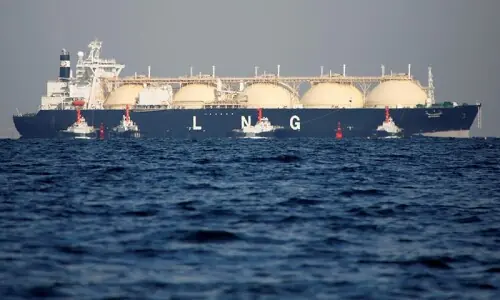
This is a recipe for demoralisation. Strong leadership requires creating and strengthening the systems that enable accurate forecasting of gas demand, particularly in the winter months, and smooth arrangements for supply, including placing advance orders for LNG vessels in the correct quantity. The work is complex, and it requires the petroleum division to work with the power division (where a significant bulk of gas demand originates). System building is the need of the hour, not a blame game.
Published in Dawn, January 11th, 2019