0
0

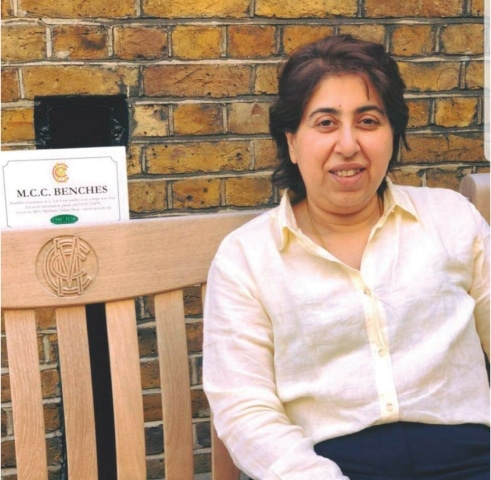
One moment she was so happy and full of life, insisting on visiting Lapland to watch the northern lights; and the next, she was just gone! It’s at times like these that one is reminded of the unpredictability of life. Her family, her friends, her fans still cannot believe that Sharmeen Said Khan is out at four short of 50.
Sharmeen’s grieving elder sister Shaiza Said Khan remembers how, only a few days ago when they were returning from London, Sharmeen had complained of having caught the flu before popping a couple of analgesics. “We spent a nice last three weeks of November together in London,” says Shaiza. “Then, when coming back to Pakistan, I took the flight to Karachi on Dec 3. Since Sharmeen was based in Lahore and headed there, her direct flight was three days later on the 6th. She landed in Lahore on the 7th and we were informed on the 9th that she had to be rushed to hospital, where they said that she had acute pneumonia,” says Shaiza.
The elder sister was by her side almost immediately. Sharmeen was on a ventilator in the ICU but when she started showing signs of improvement the doctors thought of taking her off it. “At 10.30pm on Wednesday, Dec 12, I had only left her side for a few minutes to say my prayers when I was called by her doctor, which I thought was for some minor routine matter as my sister was getting better,” she says. But when she met with the doctor outside the ICU, he had the worst news for her. Sharmeen had gone into cardiac arrest. She was gone. Shaiza couldn’t believe what he was telling her. She insisted they revive her but all attempts at that had been exhausted already.
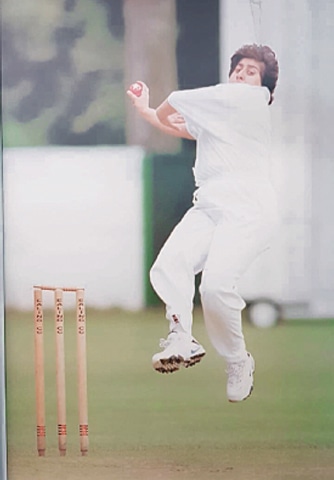
Sharmeen Said Khan, who passed away on Dec 12, was one of the founders of women’s cricket in Pakistan. Eos looks back at her illustrious life and career
Even though they were only three years apart, Shaiza treated Sharmeen more than a younger sister. “She was like her daughter,” says best friend Kiran Baluch.
Kiran and the sisters are cricket legends — Shaiza and Sharmeen for pioneering women’s cricket in Pakistan and Kiran for her superb game and the 242 she made against the West Indies in a 2004 Test at the National Stadium Karachi (NSK), which remains the highest individual score in women’s cricket ever.
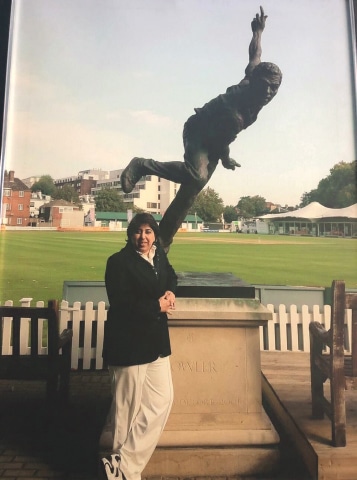
The sisters, too, were excellent players. Shaiza is arguably the best leg-break bowler Pakistan women’s cricket has ever produced. And Sharmeen bowled medium fast. She featured in two of Pakistan’s three women cricket Tests and 26 One-day Internationals. Sharmeen, along with Shaiza and Kiran had secured lifetime memberships of Lord’s Marylebone Cricket Club in 2003 as well.
“Growing up, Shaiza loved watching and playing cricket and her little sister really looked up to her. She liked doing whatever the older one did and used to follow Shaiza everywhere. Shaiza, too, doted on her,” says Kiran.
“When Shaiza thought of forming a team followed by founding an association for women’s cricket, Sharmeen was immediately by her side. And the duo managed to achieve so much because they had each other’s support,” says Kiran.
“Having studied at Concord College, Shrewsbury in Shropshire, England, the sisters got to spend quite a while in the UK and have also spent many seasons playing for Middlesex County. Later, they founded the Pakistan Women’s Cricket Control Association (PWCCA) and approached the International Women’s Cricket Council (IWCC) for its membership in 1988.
They covered the tennis court with Astroturf and ordered a new bowling machine for batting practice from South Africa. The garage at home, too, was transformed into a pavilion, with a place with blackboards and tables to use as a meeting and planning room and another area for having meals.
“They had to really struggle even for small things during those days,” says Kiran. “Since the Pakistan Cricket Board [PCB] wouldn’t share their facilities with the girls, and they were not allowed to use their grounds for playing or net practice, the sisters decided to make their own pitch at their father’s carpet factory grounds,” she adds.
They convinced Aziz Sahib, the curator at NSK to help them here as they got the material for the pitch from Multan. The factory grounds were so extensive that they built proper nets there with room from square leg to boundary. Selections were held and a team formed. To bring the team to practise they arranged for vans besides also building proper dorms at home for boarding and lodging during camps.
They were lucky to have a big house with a swimming pool and a tennis court, which their father had bought from a pre-Partition tennis player. They covered the tennis court with Astroturf and ordered a new bowling machine for batting practice from South Africa. The garage at home, too, was transformed into a pavilion, with a place with blackboards and tables to use as a meeting and planning room and another area for having meals.
Their girls’ father was so proud of them and what they were doing for cricket in Pakistan that he didn’t mind sponsoring their team. The sisters, too, weren’t a burden on him as they also helped run his business. Sharmeen had studied textile management from the University of Leeds. She had also done her Bachelor of Laws from the College of Law in London. At the time of her passing, Sharmeen was CEO of some five companies coming under the umbrella of United Carpet Group of Industries, including a jute mill and a construction and real estate business in Lahore.
The writer is a member of staff
She tweets @HasanShazia
Published in Dawn, EOS, December 23rd, 2018