0
0

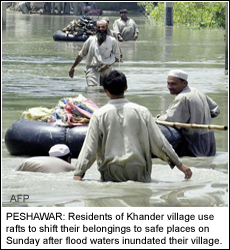 PESHAWAR, June 26: Hospitals in the NWFP have been put on alert to meet any emergency in the wake of flood in Nowshera, Peshawar and Charsadda districts, officials said.
“An amount of Rs15million has been released to hospitals in the affected districts to strengthen health facilities,” said Dr Fayyaz Ali. He said hospital staff in the three districts had been put on high alert and told to remain present.
Dr Ali said the department had launched measures to cope with emergencies, saying that the cases of gastroenteritis, malaria, hepatitis-A and E and cholera etc, usually broke out after floods.
“We have so far received about 50 people displaced by floods in river Kabul. We have strengthened health facilities in the district and hospitals are ready to attend to patients in evening and night hours,” said Dr Fawad Khan, Executive District Officer (health), Nowshera.
Meanwhile, the UN Coordination Committee said it feared outbreak of diseases in the affected areas.
“The WHO has already pledged three emergency drug kits for the people of affected areas. After our meeting on Monday, we would distribute these kits to health outlets for their distribution among patients,” said Dr Quaid Saeed, committee’s coordinator.
He said one kit was enough for 30,000 people for three months. He said the kits had been supplied by the WHO three months ago because the UN had predicted heavy floods after heavy rains and snowfall that had lashed the Frontier province earlier this year.
He said the WHO had already distributed five kits among the people of rain-hit areas and was planning to provide medicines and technical assistance to the health department to cope with the number of patients affected by the flood.
SUNSTROKE: The Health Department has allocated Rs72million to the DHQ hospitals to provide treatment to the people hit by sunstroke. An official said each hospital would get Rs3 million.
“The severe heat affects the people working in the open. They usually faint and are taken to hospitals due to dehydration with nausea, vomiting, vertigo and drowsiness,” he said, adding that patients needed intravenous transfusion of fluids.
About precautionary measures, he said people should increase daily intake of water mixed with salt when the mercury rises, because more water and salt was consumed by the body in hot weather.
He said old people, women and children should not walk in the open, while labourers cover their heads and necks with cloth.